The Boys is a kind of courtroom drama, a genre I’m not fond of, but it has some interesting twists.
It was released in 1962 and directed by Sidney J. Furie. Three years later Furie would direct one of the greatest spy movies of all time, The Ipcress File (1965).
The Boys deals with the trial of four young men on a charge of murdering a nightwatchman at a garage. The murder took place while the garage’s cashbox was being robbed.
The four boys are Stan Coulter (Dudley Sutton), Billy Herne (Ronald Lacey), Barney Lee (Jess Conrad) and Ginger Thompson (Tony Garnett).
This is not however primarily a murder mystery. It’s a movie with other fish to fry.
Victor Webster (Richard Todd) is prosecuting. The defence counsel is Montgomery (Robert Morley). The evidence is purely circumstantial but plenty of men have been hanged on the basis of circumstantial evidence.
The four young men are from working-class backgrounds and they look a bit rough. They’re noisy and rowdy. One of Montgomery’s objectives in conducting the defence is to show that all the evidence against the boys is tainted by prejudice. Because the boys look and sound a bit rough around the edges the various prosecution witnesses all jumped to the conclusion that they were “Teddy Boys” or juvenile delinquents. The 1950s had seen major moral panics in Britain about the Teddy Boys youth subculture. There had been a wave of hysteria on the subject. As a result ordinary people tended to be rather paranoid when they saw groups of young men dressed in the clothing popular among the young. In fact the four boys do not look like Teddy Boys at all, but they do look like the popular image of youth gangs.
Montgomery’s strategy is to demonstrate that these prejudiced first impressions led the various witnesses to put the worst possible interpretation on actions by the boys that may actually have been perfectly innocent and innocuous. And of course the movie is making the same point. Leaping to conclusions can have tragic consequences.
Montgomery also intends to put the four boys into the witness stand to give their own accounts of the events on that unlucky Thursday evening.
This has led to comparison between this movie and Kurosawa’s masterpiece Rashomon. There’s something in this but these comparisons should not be pushed too far. In The Boys we don’t get conflicting accounts of the same events. What we get is an accumulation of accounts each of which adds crucial details, often details that other witnesses simply could not have been aware of. Slowly we start to get a clearer picture of the events of that night.
An example is the incident earlier in the evening when a witness reported seeing Stan staring through the window of the garage at the cashbox. We later find out that he was in fact staring at a nudie calendar on the wall of the garage.
The movie makes the bold decision not to make the four boys seem too sympathetic or appear to be basically just good boys. They are a bit surly and unlikeable. In fact they’re typical teenagers, inclined to be argumentative and rowdy, but Montgomery may well be correct in portraying them as slightly irritating but essentially harmless.
So the movie is also making a point about how misleading circumstantial evidence can be and how unreliable and incomplete the statements of witnesses can be.
This was 1962, when murders were still hanged in Britain. Capital punishment was a hot-button political issue. And the movie deals with a capital crime. The four boys will be hanged if convicted. In this case there’s a possibility they will be hanged simply because the witnesses decided they didn’t like the look of them and did not consider the possibility that were dealing with high-spirited youngsters rather than vicious killers.
There’s a superb cast. Dudley Sutton and Ronald Lacey went on to have busy careers. Wonderful character actor Felix Aymler plays the judge. There are small but juicy roles for Alan Cuthbertson (delightfully pompous as usual), Patrick Magee, Wilfred Brambell and Roy Kinnear. Richard Todd as the prosecuting counsel is smooth and polished.
But it’s Robert Morley who steals the picture. He’s in devastating form.
We never actually see the murder take place. We have only the testimony of the witnesses and the four boys, just as that’s all the jury has. We don’t know if the boys are innocent or guilty. In each case the testimony is represented by a dramatic flashback which makes things more interesting for the viewer than just hearing the evidence. We see the same events multiple times, but each time we see a bit more of what led up to the events. We start to see the evidence as a connected whole rather than just the fragmentary incidents that the witnesses saw.
At no time is the evidence of the witnesses directly contradicted, it’s simply put into context.
This film is included in the Crime Collection Volume 4 DVD boxed set from Renown Pictures. The 16:9 enhanced transfer is good.
The Boys tries to be an intelligent provocative look at the weaknesses of the criminal justice system and the dangers of leaping to conclusions and mostly it succeeds. It does so without giving us the feeling we’re being subjected to a lecture, which is the pitfall into which most films invariably fall.
An unfairly neglected movie. Highly recommended.
Friday, August 26, 2022
Tuesday, August 23, 2022
The Voice of Merrill (1952)
The Voice of Merrill is a 1952 British crime thriller written and directed by John Gilling. One of my ongoing movie-watching projects is to watch as many of John Gilling’s movies as I can. He made lots of crime movies in the 50s, adventure movies for Hammer in the early 60s and then made some of Hammer’s best gothic horror movies in the mid-60s. He started in 1949 and by 1967 his career as a director was more or less over, which is a crying shame. All of the Gilling movies I’ve seen have been worth watching.
Among his early crime films Tiger by the Tail (1954), Deadly Nightshade (1953), No Trace (1950) and The Embezzler (1954) are worth seeing.
The Voice of Merrill was made by Tempean Films, the production company set up by Robert S. Baker and Monte Berman. They would go on to huge success in television as producers of The Saint.
The Voice of Merrill opens with a murder. We don’t know the identity of the victim or why she’s been murdered. The scene then switches to a restaurant where not very successful crime writer Hugh Allen is waiting for his date. She doesn’t show up, and she never will. His date was a Miss Bridges and she’s the murder victim.
At the restaurant Hugh runs into Ronald Parker (Henry Kendall), who published a couple of Hugh’s novels. Parker is dining with Alycia Roach (Valerie Hobson). Hugh and Alycia seem to feel an immediate mutual attraction. It’s not long before they embark on a love affair.
Alycia is married to Jonathan Roach (James Robertson Justice), who modestly describes himself as one of Field Marshals of British Literature. The marriage does not appear to be particularly affectionate.
Hugh Allen, Ronald Parker and Jonathan Roach were all acquainted with Miss Bridges and not one of them has an alibi for the time of the murder. This interests Inspector Thornton (Garry Marsh). What also interests Inspector Thornton is the fact that mIss Bridges was a convicted blackmailer. He can smell a motive there.
At this point the movie’s focus switches. The murder plot recedes into the background (although it will re-emerge later). The focus is now on a series of short stories which Jonathan Roach wrote some time earlier. He doesn’t think they’re up to his highest standard, not quite worthy of one of the greatest writers of the age, so he doesn’t want to acknowledge the stories as his. The BBC however is keen to broadcast the stories on radio. Someone else will have to read the stories on air, and Hugh Allen is picked for the job. Jonathan Roach despises Hugh but he’s happy with the choice, which is puzzling.
The radio series is an enormous success and the press turns the author, Hugh Merrill, into a celebrity. Of course there’s no such person as Hugh Merrill. Alycia meanwhile is hatching a plan. Her husband is dying from a heart condition. He can’t last more than three months. Provided Jonathan does the right thing and dies when he’s supposed to Hugh will be able to take the credit for the stories. This will be just what he needs to kickstart his literary career.
Jonathan might be dying but he’s enjoying himself manipulating people. He’s manipulating Ronald Parker. He knows that Miss Bridges was blackmailing Parker. He can make Parker do his bidding. We know that he’s also manipulating Alycia and Hugh but we don’t know exactly what his game is. Alycia and Hugh know they’re being manipulated but they also don’t know how or why.
And murder is still there, lingering in the background. Inspector Thornton still has work to do.
Gilling’s screenplay provides a series of fiendish and nasty twists and the nastiness of the twists is enhanced by the fact that the characters have no idea what lies in store for them.
The fine cast helps things along. Edward Underdown is very good as Hugh, a man who is increasingly being swept along by events which he doesn’t understand.
Valerie Hobson is, as usual, a fine leading lady. Alycia is clever but she may not be clever enough and Hobson manages to make her sympathetic. We don’t approve of her actions but she herself feels that they’re justified.
James Robertson Justice gives a characteristically bravura performance.
This movie is included in the Renown Pictures Crime Collection Volume 4 DVD boxed set. The transfer is acceptable.
The Voice of Merrill doesn’t fit neatly into genre boundaries. It’s both a mystery and a twisted romantic melodrama and while the melodrama predominates there’s always the sense that murder is casting a shadow over the characters.
This is an oddball movie but a very very good one. It breaks genre rules but it gets away with it. Highly recommended.
Labels:
1950s,
B-movies,
british cinema,
crime movies,
melodrama
Friday, August 19, 2022
Robin Hood (1922)
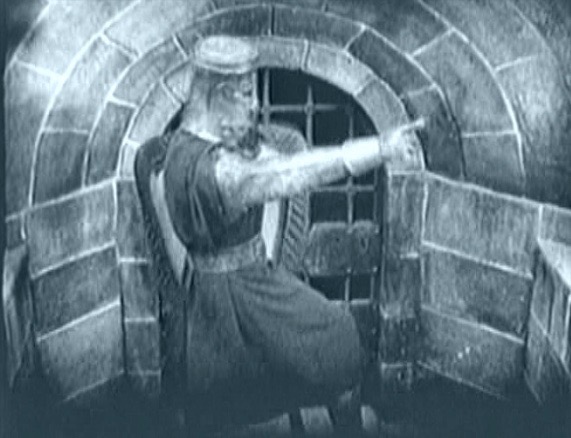
The 1922 Robin Hood with Douglas Fairbanks was not the first screen version of the Robin Hood story but it’s the one that made the legendary outlaw into a swashbuckling cinematic icon. It made Fairbanks an even bigger star than he already was. And it includes all of the elements that we now associate with the legend.
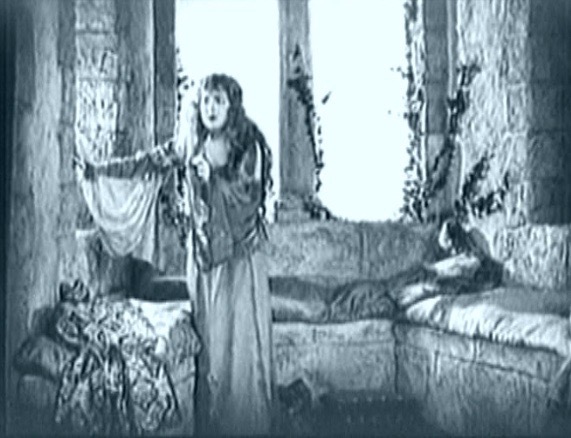
King Richard I, Richard Lionheart (Wallace Beery), sets off on a Crusade to the Holy Land. His brother Prince John (Sam De Grasse) will act as regent during his absence. Richard will be accompanied by his closest friend, the Earl of Huntingdon (Fairbanks). Huntingdon has just fallen in love with Lady Marian Fitzwalter (Enid Bennett) but he leaves her behind to go off on Crusade. Prince John proves to be a cruel tyrant. And a lustful one. He wants Lady Marian. Marian sends a message to Huntingdon, telling him of the horrors inflicted on England by Prince John. Huntingdon deserts from the Crusader army to return to England, only to find that Marian is dead.
Huntingdon becomes the leader of an outlaw gang based in Sherwood Forest. He becomes known as Robin Hood. They rob the rich to give to the poor and they work towards preserving King Richard’s throne for him.
This is the popular modern version of the legend, with Robin Hood being a dispossessed aristocrat and being as much concerned with King Richard’s throne as he is with helping the poor.
King Richard I, Richard Lionheart (Wallace Beery), sets off on a Crusade to the Holy Land. His brother Prince John (Sam De Grasse) will act as regent during his absence. Richard will be accompanied by his closest friend, the Earl of Huntingdon (Fairbanks). Huntingdon has just fallen in love with Lady Marian Fitzwalter (Enid Bennett) but he leaves her behind to go off on Crusade. Prince John proves to be a cruel tyrant. And a lustful one. He wants Lady Marian. Marian sends a message to Huntingdon, telling him of the horrors inflicted on England by Prince John. Huntingdon deserts from the Crusader army to return to England, only to find that Marian is dead.
Huntingdon becomes the leader of an outlaw gang based in Sherwood Forest. He becomes known as Robin Hood. They rob the rich to give to the poor and they work towards preserving King Richard’s throne for him.
This is the popular modern version of the legend, with Robin Hood being a dispossessed aristocrat and being as much concerned with King Richard’s throne as he is with helping the poor.
Whether there really was a Robin Hood is very very doubtful. In early versions of the legend he is not an aristocrat but a simple farmer turned outlaw and the events take place some considerable time after Richard’s reign.
This was an awesomely expensive film. It was so expensive that no-one would finance it so Fairbanks did so out of his own pocket. Enormous sets were constructed. The castle is extraordinarily impressive. Everything is on the grand scale. There are hordes of extras.
The performances are in the typical silent movie style, but they’re not overly exaggerated. And in a movie such as this larger-than-life performances seem perfectly appropriate.
The physicality of Fairbanks is impressive. He was middle-aged and a chain smoker but unbelievably athletic and did his own stunts (and there are some truly spectacular stunts with the sliding down the tapestry scene being a highlight). He really is convincing as a hero in the epic style.
The main problem is that the film is too long, and spends too much time on the backstory. Of course that might well make it appeal to audiences today who are accustomed to excessively long movies and excessively detailed origin stories.
Once we get past the backstory the movie really livens up with some stirring action scenes.
I’ve always through of Robin Hood’s Merrie Men being perhaps a few dozen men, but in this movie Robin Hood has hundreds of followers. He’s the leader of an outlaw army rather than an outlaw band.
All the familiar characters are there - Will Scarlett, Friar Tuck, Allan-a-Dale, Little John.
Of course the audience knows all along that Lady Marian is still alive - we saw her fake her death when she decided that that was the only way to escape the unwelcome attentions of Price John’s chief henchman (and the Earl of Huntingdon’s hated rival), Sir Guy Gisbourne. Lady Marian takes refuge in a nunnery, but she doesn’t become a nun. She is sure that Huntingdon will come back for her to claim her as his bride.
This is not the best of the Fairbanks swashbucklers. The Mark of Zorro for one is better, The Thief of Bagdad is much more visually stunning and The Gaucho is more interesting. But once you get past the overly slow first half Robin Hood offers pretty decent entertainment.
If you like swashbucklers and you like silent movies (or if you’re a Fairbanks fan) then it’s worth seeing. Recommended, but it is a bit long and a bit slow.
This was an awesomely expensive film. It was so expensive that no-one would finance it so Fairbanks did so out of his own pocket. Enormous sets were constructed. The castle is extraordinarily impressive. Everything is on the grand scale. There are hordes of extras.
The performances are in the typical silent movie style, but they’re not overly exaggerated. And in a movie such as this larger-than-life performances seem perfectly appropriate.
The physicality of Fairbanks is impressive. He was middle-aged and a chain smoker but unbelievably athletic and did his own stunts (and there are some truly spectacular stunts with the sliding down the tapestry scene being a highlight). He really is convincing as a hero in the epic style.
The main problem is that the film is too long, and spends too much time on the backstory. Of course that might well make it appeal to audiences today who are accustomed to excessively long movies and excessively detailed origin stories.
Once we get past the backstory the movie really livens up with some stirring action scenes.
I’ve always through of Robin Hood’s Merrie Men being perhaps a few dozen men, but in this movie Robin Hood has hundreds of followers. He’s the leader of an outlaw army rather than an outlaw band.
All the familiar characters are there - Will Scarlett, Friar Tuck, Allan-a-Dale, Little John.
Of course the audience knows all along that Lady Marian is still alive - we saw her fake her death when she decided that that was the only way to escape the unwelcome attentions of Price John’s chief henchman (and the Earl of Huntingdon’s hated rival), Sir Guy Gisbourne. Lady Marian takes refuge in a nunnery, but she doesn’t become a nun. She is sure that Huntingdon will come back for her to claim her as his bride.
This is not the best of the Fairbanks swashbucklers. The Mark of Zorro for one is better, The Thief of Bagdad is much more visually stunning and The Gaucho is more interesting. But once you get past the overly slow first half Robin Hood offers pretty decent entertainment.
If you like swashbucklers and you like silent movies (or if you’re a Fairbanks fan) then it’s worth seeing. Recommended, but it is a bit long and a bit slow.
Saturday, August 13, 2022
Sinbad the Sailor (1947)
Sinbad the Sailor is a 1947 RKO swashbuckler and the studio decided to spend some real money on it. It’s in glorious Technicolor and looks stunning. And it stars Douglas Fairbanks Jr and Maureen O’Hara.
The tales of Sinbad were among the most entertaining in that fabulous collection of eastern tales, The Thousand Nights and One Night (more commonly known as the Arabian Nights). The Arabian Nights became a major inspiration for swashbuckling adventure movies and there have been countless Sinbad movies. What’s surprising is that pretty much all of them are worth seeing.
Sinbad is a great sailor, trader, explorer and adventurer. We also get the impression that he is an accomplished and inveterate liar. But a charming one.
Sinbad and his sidekick Abbu board a fine sailing ship which was headed for the rocks and certain destruction. The ship’s crewmen are all dead. Sinbad intends to claim the ship by the law of salvage. But someone else wants that ship, a woman. A beautiful woman, although (as we will soon discover) possibly a dangerous woman. She is Shireen (Maureen O’Hara).
Sinbad found a chart on the ship, which he believes will lead him to the fabled island where the lost treasure of Alexander the Great can be found. He also notices a design on the window of the captain’s cabin which matches a medallion he has worn for years. Sinbad is convinced that he must have this ship and must find the lost island.
A major theme of Islamic folk tales is destiny, or kismet. Sinbad believes he has found his kismet.
He’s fascinated by Shireen and tries to convince her to go with him. She vanishes and he heads for a port renowned as a heaven of villains and cut-throats. He has a suspicion that he will find Shireen there. And she is part of his kismet.
Whether he can trust Shireen is an open question. It’s unlikely. She is ambitious and avaricious. Of course Sinbad is pretty ambitious and avaricious as well.
The problem is that Sinbad has lost that chart. It’s possible that Shireen knows how to find the island, but she thinks that Sinbad knows. The villainous emir who owns Shireen thinks Sinbad knows. I’s possible that whoever does know how to find that island doesn’t know that he (or she) has that knowledge.
Sinbad, Shireen and the emir all want Alexander’s lost gold. There’s going to be lots of intrigue and we can expect some double-crosses.
We also expect action and we get plenty of that.
The great swashbuckling stars were of course Douglas Fairbanks Sr, Errol Flynn, Tyrone Power and Stewart Granger. Douglas Fairbanks Jr played only a handful of swashbuckling roles but he played them so well that he certainly deserves to be added to the list. He seems to have picked up a few valuable lessons from his father - in a swashbuckler never be afraid of going over-the-top. You just can’t be too melodramatic in these sorts of movies. And nobody could overact like Douglas Fairbanks Jr when he was in the right mood. As Sinbad he is certainly a rogue, maybe even a bit of a scoundrel at times, but he is the stuff of which heroes are made. In this movie he’s all manic energy.
And obviously you can’t go wrong with Maureen O’Hara as the female lead in a swashbuckler.
The standouts among the fine supporting cast are Anthony Quinn (as a deadly scheming emir) and Mike Mazurki. Not to mention Jane Greer in a bit part. Especially good is Walter Slezak as Melik, a clever barber who is probably quite untrustworthy but definitely useful.
Unfortunately Sinbad gets a comic relief sidekick, George Tobias as Abbu. He’s annoying but just about bearable.
This is a Sinbad story without magic or monsters which gives it a very different feel compared to the later movies with their Ray Harryhausen special effects. Sinbad does have a reputation as a magician but he’s really just a clever illusionist. This is a straight adventure film rather than a fantasy.
The Warner Archive DVD is barebones but looks terrific.
Sinbad the Sailor is a fine lively swashbuckler. The main reason to see it is Douglas Fairbanks Jr at the absolute top of his game. He really is superb. Highly recommended.
The tales of Sinbad were among the most entertaining in that fabulous collection of eastern tales, The Thousand Nights and One Night (more commonly known as the Arabian Nights). The Arabian Nights became a major inspiration for swashbuckling adventure movies and there have been countless Sinbad movies. What’s surprising is that pretty much all of them are worth seeing.
Sinbad is a great sailor, trader, explorer and adventurer. We also get the impression that he is an accomplished and inveterate liar. But a charming one.
Sinbad and his sidekick Abbu board a fine sailing ship which was headed for the rocks and certain destruction. The ship’s crewmen are all dead. Sinbad intends to claim the ship by the law of salvage. But someone else wants that ship, a woman. A beautiful woman, although (as we will soon discover) possibly a dangerous woman. She is Shireen (Maureen O’Hara).
Sinbad found a chart on the ship, which he believes will lead him to the fabled island where the lost treasure of Alexander the Great can be found. He also notices a design on the window of the captain’s cabin which matches a medallion he has worn for years. Sinbad is convinced that he must have this ship and must find the lost island.
A major theme of Islamic folk tales is destiny, or kismet. Sinbad believes he has found his kismet.
He’s fascinated by Shireen and tries to convince her to go with him. She vanishes and he heads for a port renowned as a heaven of villains and cut-throats. He has a suspicion that he will find Shireen there. And she is part of his kismet.
Whether he can trust Shireen is an open question. It’s unlikely. She is ambitious and avaricious. Of course Sinbad is pretty ambitious and avaricious as well.
The problem is that Sinbad has lost that chart. It’s possible that Shireen knows how to find the island, but she thinks that Sinbad knows. The villainous emir who owns Shireen thinks Sinbad knows. I’s possible that whoever does know how to find that island doesn’t know that he (or she) has that knowledge.
Sinbad, Shireen and the emir all want Alexander’s lost gold. There’s going to be lots of intrigue and we can expect some double-crosses.
We also expect action and we get plenty of that.
The great swashbuckling stars were of course Douglas Fairbanks Sr, Errol Flynn, Tyrone Power and Stewart Granger. Douglas Fairbanks Jr played only a handful of swashbuckling roles but he played them so well that he certainly deserves to be added to the list. He seems to have picked up a few valuable lessons from his father - in a swashbuckler never be afraid of going over-the-top. You just can’t be too melodramatic in these sorts of movies. And nobody could overact like Douglas Fairbanks Jr when he was in the right mood. As Sinbad he is certainly a rogue, maybe even a bit of a scoundrel at times, but he is the stuff of which heroes are made. In this movie he’s all manic energy.
And obviously you can’t go wrong with Maureen O’Hara as the female lead in a swashbuckler.
The standouts among the fine supporting cast are Anthony Quinn (as a deadly scheming emir) and Mike Mazurki. Not to mention Jane Greer in a bit part. Especially good is Walter Slezak as Melik, a clever barber who is probably quite untrustworthy but definitely useful.
Unfortunately Sinbad gets a comic relief sidekick, George Tobias as Abbu. He’s annoying but just about bearable.
This is a Sinbad story without magic or monsters which gives it a very different feel compared to the later movies with their Ray Harryhausen special effects. Sinbad does have a reputation as a magician but he’s really just a clever illusionist. This is a straight adventure film rather than a fantasy.
The Warner Archive DVD is barebones but looks terrific.
Sinbad the Sailor is a fine lively swashbuckler. The main reason to see it is Douglas Fairbanks Jr at the absolute top of his game. He really is superb. Highly recommended.
Monday, August 8, 2022
The Violin Case Murders (1965)
The Violin Case Murders (AKA Tread Softly, original German title Schüsse aus dem Geigenkasten) was the first of the eight Jerry Cotton crime thrillers made by Allianz Filmproduktion in West Germany and distributed by Constantin Film. The Jerry Cotton movies were similar in some ways to the hugely popular Rialto Edgar Wallace krimis but with more emphasis on action and with a harder edge. Being ostensibly set in the United States rather than England also gives them a distinctively different flavour.
American actor George Nader played ace FBI agent Jerry Cotton with German actor Heinz Weiss in the sidekick rôle as Phil Decker.
This movie hits the ground running. There’s a brutal murder using a machine-gun hidden in a violin case followed by two more equally brutal murders. The murders take place during the course of two robberies. One robbery takes place in Pasadena in California and one in Chicago but when the FBI gets a phone tip-off indicating that the crimes are linked it becomes a federal case.
The tip-off came from Mary Springfield. She’s found out that her sister Kitty is mixed up with gangsters, and those gangsters are pulling off major robberies with violence.
Jerry Cotton gets just enough information out of Mary to provide a lead. It involves a bowling alley near Grand Central Station and a bomb. It’s a race against time and Jerry has to infiltrate the gang by posing as an alcoholic hoodlum. Why an alcoholic? Well I guess there’s a sort of reason for it and it lets George Nader have some fun.
Jerry discovers the gang’s plan but stopping them won’t be easy and there’s a complication which means Jerry has to go lone wolf. He can’t let his boss at the FBI know what he’s up to. Jerry has reasons for his action but it could put his career in jeopardy if it goes wrong. That’s assuming he survives which is by no means certain. He’s taking big risks.
This is a heist movie. The heist is not overly complicated but the focus is mainly on how it plays out in practice and that’s where this movie shines. Things go wrong for the gang but they go badly wrong for Jerry Cotton as well. It seems like the gangsters are going to slip through his fingers.
This is a pretty violent movie for 1965. There’s no blood or gore but there are some shockingly cold-blooded killings.
The pacing is pleasingly brisk. Jerry Cotton has little time to spare for romance. He’s dedicated to the job and he’s hardboiled all the way through.
George Nader makes a very satisfactory square-jawed action hero. Nader had had moderate success in Hollywood in the 50s but by the 60s he joined the small army of American actors and actresses who found that Europe offered much better opportunities.
Jerry Cotton is a pulp fiction fan’s idea of what an FBI agent would be like. This is not a movie that concerns itself overmuch with realism.
Making a modestly budgeted feature in Germany with an American setting means that considerable use has to be made of rear projection and stock footage but these elements are integrated into the movie with more finesse than is usually the case. Once the story starts to grab you you find yourself not really noticing.
Mention must be made of Peter Thomas’s music. It’s wildly inappropriate but it works and it adds to the crazy 60s euro vibe.
All eight Jerry Cotton films are included in the recent German DVD boxed set, with the English dubbed versions included. The 16:9 enhanced transfer for The Violin Case Murders looks terrific (the movie was shot widescreen in black-and-white although the later movies in the series were in colour).
The Violin Case Murders aims to provide pure high-octane entertainment and it delivers the goods. Highly recommended.
American actor George Nader played ace FBI agent Jerry Cotton with German actor Heinz Weiss in the sidekick rôle as Phil Decker.
This movie hits the ground running. There’s a brutal murder using a machine-gun hidden in a violin case followed by two more equally brutal murders. The murders take place during the course of two robberies. One robbery takes place in Pasadena in California and one in Chicago but when the FBI gets a phone tip-off indicating that the crimes are linked it becomes a federal case.
The tip-off came from Mary Springfield. She’s found out that her sister Kitty is mixed up with gangsters, and those gangsters are pulling off major robberies with violence.
Jerry Cotton gets just enough information out of Mary to provide a lead. It involves a bowling alley near Grand Central Station and a bomb. It’s a race against time and Jerry has to infiltrate the gang by posing as an alcoholic hoodlum. Why an alcoholic? Well I guess there’s a sort of reason for it and it lets George Nader have some fun.
Jerry discovers the gang’s plan but stopping them won’t be easy and there’s a complication which means Jerry has to go lone wolf. He can’t let his boss at the FBI know what he’s up to. Jerry has reasons for his action but it could put his career in jeopardy if it goes wrong. That’s assuming he survives which is by no means certain. He’s taking big risks.
This is a heist movie. The heist is not overly complicated but the focus is mainly on how it plays out in practice and that’s where this movie shines. Things go wrong for the gang but they go badly wrong for Jerry Cotton as well. It seems like the gangsters are going to slip through his fingers.
This is a pretty violent movie for 1965. There’s no blood or gore but there are some shockingly cold-blooded killings.
The pacing is pleasingly brisk. Jerry Cotton has little time to spare for romance. He’s dedicated to the job and he’s hardboiled all the way through.
George Nader makes a very satisfactory square-jawed action hero. Nader had had moderate success in Hollywood in the 50s but by the 60s he joined the small army of American actors and actresses who found that Europe offered much better opportunities.
Jerry Cotton is a pulp fiction fan’s idea of what an FBI agent would be like. This is not a movie that concerns itself overmuch with realism.
Making a modestly budgeted feature in Germany with an American setting means that considerable use has to be made of rear projection and stock footage but these elements are integrated into the movie with more finesse than is usually the case. Once the story starts to grab you you find yourself not really noticing.
Mention must be made of Peter Thomas’s music. It’s wildly inappropriate but it works and it adds to the crazy 60s euro vibe.
All eight Jerry Cotton films are included in the recent German DVD boxed set, with the English dubbed versions included. The 16:9 enhanced transfer for The Violin Case Murders looks terrific (the movie was shot widescreen in black-and-white although the later movies in the series were in colour).
The Violin Case Murders aims to provide pure high-octane entertainment and it delivers the goods. Highly recommended.
Friday, August 5, 2022
Operation Diplomat (1953)
Operation Diplomat is a 1953 British B-movie crime thriller and the title suggest that we might get a hint of international intrigue as well. That turns out to be the case.
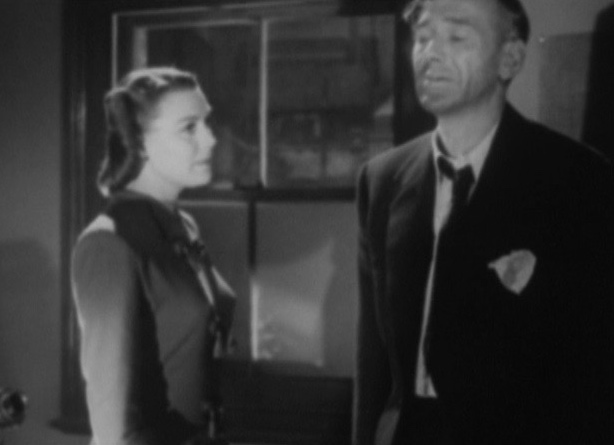
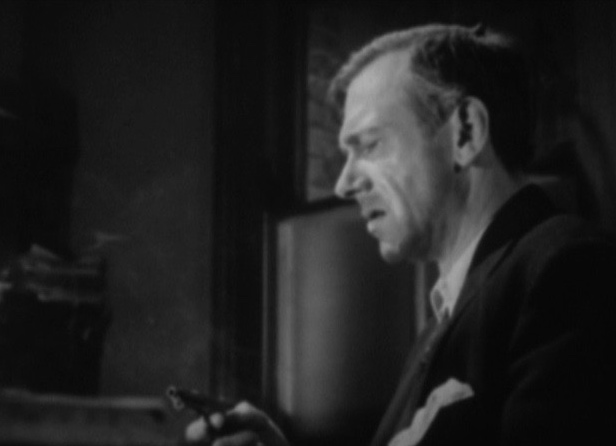
Mark Fenton (Guy Rolfe) is a prominent surgeon. He’s a bit surprised when he’s approached by a nurse and told to get into the back of an ambulance but she tells him there’s a very seriously ill man in the ambulance. Mark Fenton takes being a doctor very seriously. He’s not going to refuse such an urgent request. When he gets into the ambulance there’s no patient but he gets a gun pointed at him and he’s driven to a remote house in the country.
That’s where his patient is but Wade (Sydney Tafler), the man with the gun, has no intention of revealing the name of the patient. He does offer Fenton a very fat fee to treat the patient and keep his mouth shut.
Then lots of perplexing things start to happen to Mark Fenton. He is drugged. He is introduced to the prospective daughter-in-law of one of his patients, a girl named Lisa (Lisa Daniely), and he’s sure he saw her at that mysterious country house. He is interrogated by a man from the Foreign Office, but maybe he’s not from the Foreign Office at all. He finds out the identity of the man on whom he operated, but the identification must be wrong. Corpses star to accumulate around him. The police don’t believe a word of his story.
This is one of those thrillers in which a very ordinary man is caught in a web of intrigue which he doesn’t understand, he can’t ask the police for help and if he wants to survive he’ll have to somehow untangle that web himself.
Mark Fenton is neither a detective nor a spy but he’s an intelligent man and he doesn’t enjoy being manipulated.
He’s also annoyed when a nurse at the hospital, Sister Rogers (Patricia Dainton), gets drawn into the situation. He’s also annoyed that some of the accumulating corpses seem to belong to innocent bystanders. He’s dealing with ruthless people who will kill without hesitation.
He doesn’t have many clues to go on. Just something about a golden valley, which he comes to suspect is a location in Hampshire.
It would help if he knew where that mysterious house is, but he has no idea.
It’s pretty obvious what the bad guys are up to but who are the bad guys? Wade is clearly a bad guy but it’s equally clear that he’s a minor player and that someone else is pulling the strings.
There’s mystery and suspense and at least one good action sequence.
This movie has a really fine cast. Guy Rolfe’s gaunt looks made him a successful character actor but here he shows that he could handle leading roles very well indeed. He brings a certain determined sincerity to his performance. Lisa Daniely and Patricia Dainton were fine actresses. There’s Anton Diffring, who revelled in rôles that allowed him to play a sinister foreigner (in British movies of this period all foreigners are considered sinister unless proven otherwise).
Sydney Tafler is a particular favourite of mine. He was equally adept in comic and serious parts and always brought that little something extra to his performances.
This movie was based on a Francis Durbridge story and it’s very much typical of the Durbridge approach to the thriller genre, with the hero having to deal with lots of nasty little plot twists. Operation Diplomat is also reminiscent of the Eric Ambler approach - take an ordinary sort of guy and plunge him into a world of crime or espionage in which he is hopelessly out of his depth. Durbridge’s most famous character is crime writer-amateur detective Paul Temple who appeared in numerous radio plays, novels (the first being Send for Paul Temple), several movies (beginning with Send for Paul Temple in 1946) and the excellent 1969-71 BBC Paul Temple TV series. Durbridge also did lots of TV serials for the BBC, including A Game of Murder (1966), A Man Called Harry Brent (1965) and The Doll (1975). Anything Francis Durbridge wrote is going to be thoroughly enjoyable twisted entertainment.
Operation Diplomat was adapted from a Durbridge-penned TV serial which was probably a new benefit - having to compress the action into 70 minutes means the pacing is pleasingly brisk. It probably also explains why the occasional plot strand is left hanging (we never really find out about the painting which initially seems like it’s going to be a vital clue).
Director John Guillermin would go on to helm blockbusters such as The Towering Inferno and King Kong but even more interesting (to me at least) is that he directed one of the best-ever Tarzan movies, Tarzan’s Greatest Adventure (1959), and the very underrated WW1 aerial combat movie The Blue Max.
This movie is included in the Renown Pictures Crime Collection Volume 4 DVD boxed set. The transfer is extremely good. A brief introduction to the film by star Patricia Dainton is the only extra.
Operation Diplomat is fast-moving lightweight entertainment. Don’t think too much about the plot, just sit back and enjoy the fun and the fine performances. Recommended.
Mark Fenton (Guy Rolfe) is a prominent surgeon. He’s a bit surprised when he’s approached by a nurse and told to get into the back of an ambulance but she tells him there’s a very seriously ill man in the ambulance. Mark Fenton takes being a doctor very seriously. He’s not going to refuse such an urgent request. When he gets into the ambulance there’s no patient but he gets a gun pointed at him and he’s driven to a remote house in the country.
That’s where his patient is but Wade (Sydney Tafler), the man with the gun, has no intention of revealing the name of the patient. He does offer Fenton a very fat fee to treat the patient and keep his mouth shut.
Then lots of perplexing things start to happen to Mark Fenton. He is drugged. He is introduced to the prospective daughter-in-law of one of his patients, a girl named Lisa (Lisa Daniely), and he’s sure he saw her at that mysterious country house. He is interrogated by a man from the Foreign Office, but maybe he’s not from the Foreign Office at all. He finds out the identity of the man on whom he operated, but the identification must be wrong. Corpses star to accumulate around him. The police don’t believe a word of his story.
This is one of those thrillers in which a very ordinary man is caught in a web of intrigue which he doesn’t understand, he can’t ask the police for help and if he wants to survive he’ll have to somehow untangle that web himself.
Mark Fenton is neither a detective nor a spy but he’s an intelligent man and he doesn’t enjoy being manipulated.
He’s also annoyed when a nurse at the hospital, Sister Rogers (Patricia Dainton), gets drawn into the situation. He’s also annoyed that some of the accumulating corpses seem to belong to innocent bystanders. He’s dealing with ruthless people who will kill without hesitation.
He doesn’t have many clues to go on. Just something about a golden valley, which he comes to suspect is a location in Hampshire.
It would help if he knew where that mysterious house is, but he has no idea.
It’s pretty obvious what the bad guys are up to but who are the bad guys? Wade is clearly a bad guy but it’s equally clear that he’s a minor player and that someone else is pulling the strings.
There’s mystery and suspense and at least one good action sequence.
This movie has a really fine cast. Guy Rolfe’s gaunt looks made him a successful character actor but here he shows that he could handle leading roles very well indeed. He brings a certain determined sincerity to his performance. Lisa Daniely and Patricia Dainton were fine actresses. There’s Anton Diffring, who revelled in rôles that allowed him to play a sinister foreigner (in British movies of this period all foreigners are considered sinister unless proven otherwise).
Sydney Tafler is a particular favourite of mine. He was equally adept in comic and serious parts and always brought that little something extra to his performances.
This movie was based on a Francis Durbridge story and it’s very much typical of the Durbridge approach to the thriller genre, with the hero having to deal with lots of nasty little plot twists. Operation Diplomat is also reminiscent of the Eric Ambler approach - take an ordinary sort of guy and plunge him into a world of crime or espionage in which he is hopelessly out of his depth. Durbridge’s most famous character is crime writer-amateur detective Paul Temple who appeared in numerous radio plays, novels (the first being Send for Paul Temple), several movies (beginning with Send for Paul Temple in 1946) and the excellent 1969-71 BBC Paul Temple TV series. Durbridge also did lots of TV serials for the BBC, including A Game of Murder (1966), A Man Called Harry Brent (1965) and The Doll (1975). Anything Francis Durbridge wrote is going to be thoroughly enjoyable twisted entertainment.
Operation Diplomat was adapted from a Durbridge-penned TV serial which was probably a new benefit - having to compress the action into 70 minutes means the pacing is pleasingly brisk. It probably also explains why the occasional plot strand is left hanging (we never really find out about the painting which initially seems like it’s going to be a vital clue).
Director John Guillermin would go on to helm blockbusters such as The Towering Inferno and King Kong but even more interesting (to me at least) is that he directed one of the best-ever Tarzan movies, Tarzan’s Greatest Adventure (1959), and the very underrated WW1 aerial combat movie The Blue Max.
This movie is included in the Renown Pictures Crime Collection Volume 4 DVD boxed set. The transfer is extremely good. A brief introduction to the film by star Patricia Dainton is the only extra.
Operation Diplomat is fast-moving lightweight entertainment. Don’t think too much about the plot, just sit back and enjoy the fun and the fine performances. Recommended.
Labels:
1950s,
B-movies,
british cinema,
crime movies,
spy thriller,
thriller
Wednesday, August 3, 2022
Vengeance is Mine (1949)
Vengeance is Mine is a 1949 British crime melodrama B-movie. The central premise has been used a number of times but it’s a premise that does promise some decent suspense and some twists.
Charles Heywood (Valentine Dyall) hires a hitman to kill him. The reason is obvious. Charles is dying and he wants to be murdered in order to frame someone for his murder.
It’s all part of an obsessive campaign of revenge that he’s been waging against Richard Kemp (Arthur Brander). Charles had been a successful businessman. Kemp involved him, unwittingly, in a nasty fraud. Kemp got off scot-free but Charles served a lengthy prison term.
As soon as he was released Charles set about slowly destroying Richard Kemp.
Then fate threw a curve ball at Charles. His doctor informed him that he had six months to live. That’s when Charles came up with his clever plan to frame Kemp. He found a very unlikely hitman in the person of Sammy Parsons (Richard Goolden). Sammy seems like a silly jovial ageing eccentric but that’s why he’s such a deadly and successful hitman. Nobody would ever suspect him.
You can probably guess some of the plot twists that follow. The upshot is that Charles has to find Sammy Parsons. But Sammy Parsons is nowhere to be found. This is apparently his usual method. When he’s about to make a hit he just disappears for a few weeks before carrying out the killing. And nobody has ever figured out exactly where it is that he disappears to.
The other complication for Charles is his secretary Linda Farrell (Anne Firth). He’s fallen hopelessly in love with her, and she loves him. She has taught him that there’s more to life than revenge. She has given him a glimpse of happiness. But Charles has two sentences of death hanging over his head.
This was clearly a cheap movie. A quota quickie if you like.
Writer-director Alan Cullimore seems to have made only two feature films including his one. On the evidence of this film he was moderately competent but given the low budget he presumably had little opportunity to do anything clever or ambitious.
Valentine Dyall is an interesting actor. He achieved his greatest fame in radio (he had a great voice). He did a lot of television work. In movies he mostly played supporting rôles. This is one of his very few starring rôles. He does quite a good job here, making Charles obsessive and disturbing in his obsessiveness but still fairly sympathetic. There’s a lot of good in Charles. He just needs a woman who can bring out that good in him. Maybe Linda can do that, but maybe it will be too late.
Charles slowly softens as he begins dimly to perceive what his quest for vengeance has done to him, and the gradual change in his character is believable. Linda is slowly teaching him to have trust. Maybe not trust in people in general, but he is learning to trust her and that’s a start.
Anne Firth is fine as Linda. We can see why she’s attracted to Charles. She can see things in him that he can’t see himself.
Sam Kydd plays Charles’ faithful friend and business associate Stacy. This is one of Kydd’s more substantial parts and he’s very solid.
You know that there are several ways the plot could be resolved and although we suspect how it will end we can’t be certain. Cullimore’s script is quite competent.
This is one of ten movies in the Renown Pictures Crime Collection Volume 2 DVD boxed set. The quality of the movies is variable but it does include neglected gems such as The Third Alibi (1961) and Impulse (1954). The transfer for Vengeance is Mine is far from pristine but it’s perfectly watchable.
An enormous number of fine British crime B-movies have been released on DVD over the past few years. Companies like Network specialise in finding obscure but forgotten treasures and releasing them in superb transfers. Renown Pictures take a different approach. They simply find any obscure forgotten B-film and release it completely unrestored. Some of their releases are, to be honest, movies that have been forgotten because they deserved to be forgotten. But Renown will collect ten or so obscure movies and release them in boxed sets. They’re like a lucky dip. You know that most of the movies in these sets will be so-so but you also know that each set will contain at least a couple of absolute gems. The sets work out to be great value for money. And even the lesser movies are sometimes interesting.
Vengeance is Mine isn’t a great movie but it’s decent entertainment as long as you don’t set your expectations too high. Recommended.
Charles Heywood (Valentine Dyall) hires a hitman to kill him. The reason is obvious. Charles is dying and he wants to be murdered in order to frame someone for his murder.
It’s all part of an obsessive campaign of revenge that he’s been waging against Richard Kemp (Arthur Brander). Charles had been a successful businessman. Kemp involved him, unwittingly, in a nasty fraud. Kemp got off scot-free but Charles served a lengthy prison term.
As soon as he was released Charles set about slowly destroying Richard Kemp.
Then fate threw a curve ball at Charles. His doctor informed him that he had six months to live. That’s when Charles came up with his clever plan to frame Kemp. He found a very unlikely hitman in the person of Sammy Parsons (Richard Goolden). Sammy seems like a silly jovial ageing eccentric but that’s why he’s such a deadly and successful hitman. Nobody would ever suspect him.
You can probably guess some of the plot twists that follow. The upshot is that Charles has to find Sammy Parsons. But Sammy Parsons is nowhere to be found. This is apparently his usual method. When he’s about to make a hit he just disappears for a few weeks before carrying out the killing. And nobody has ever figured out exactly where it is that he disappears to.
The other complication for Charles is his secretary Linda Farrell (Anne Firth). He’s fallen hopelessly in love with her, and she loves him. She has taught him that there’s more to life than revenge. She has given him a glimpse of happiness. But Charles has two sentences of death hanging over his head.
This was clearly a cheap movie. A quota quickie if you like.
Writer-director Alan Cullimore seems to have made only two feature films including his one. On the evidence of this film he was moderately competent but given the low budget he presumably had little opportunity to do anything clever or ambitious.
Valentine Dyall is an interesting actor. He achieved his greatest fame in radio (he had a great voice). He did a lot of television work. In movies he mostly played supporting rôles. This is one of his very few starring rôles. He does quite a good job here, making Charles obsessive and disturbing in his obsessiveness but still fairly sympathetic. There’s a lot of good in Charles. He just needs a woman who can bring out that good in him. Maybe Linda can do that, but maybe it will be too late.
Charles slowly softens as he begins dimly to perceive what his quest for vengeance has done to him, and the gradual change in his character is believable. Linda is slowly teaching him to have trust. Maybe not trust in people in general, but he is learning to trust her and that’s a start.
Anne Firth is fine as Linda. We can see why she’s attracted to Charles. She can see things in him that he can’t see himself.
Sam Kydd plays Charles’ faithful friend and business associate Stacy. This is one of Kydd’s more substantial parts and he’s very solid.
You know that there are several ways the plot could be resolved and although we suspect how it will end we can’t be certain. Cullimore’s script is quite competent.
This is one of ten movies in the Renown Pictures Crime Collection Volume 2 DVD boxed set. The quality of the movies is variable but it does include neglected gems such as The Third Alibi (1961) and Impulse (1954). The transfer for Vengeance is Mine is far from pristine but it’s perfectly watchable.
An enormous number of fine British crime B-movies have been released on DVD over the past few years. Companies like Network specialise in finding obscure but forgotten treasures and releasing them in superb transfers. Renown Pictures take a different approach. They simply find any obscure forgotten B-film and release it completely unrestored. Some of their releases are, to be honest, movies that have been forgotten because they deserved to be forgotten. But Renown will collect ten or so obscure movies and release them in boxed sets. They’re like a lucky dip. You know that most of the movies in these sets will be so-so but you also know that each set will contain at least a couple of absolute gems. The sets work out to be great value for money. And even the lesser movies are sometimes interesting.
Vengeance is Mine isn’t a great movie but it’s decent entertainment as long as you don’t set your expectations too high. Recommended.
Labels:
1940s,
B-movies,
british cinema,
crime movies,
film noir
Subscribe to:
Posts (Atom)