Showing posts with label peter lorre. Show all posts

Friday, December 13, 2024

Black Angel (1946)

I would not describe Black Angel, released by Universal in 1946, as an obscure film noir but over the years it definitely has not received quite as much attention as it deserves.

It is based on a Cornell Woolrich novel and it was almost impossible to make a bad movie based on a Woolrich story. His stories just really lent themselves to cinematic adaptation. Woolrich was not a great prose stylist but he had a talent for viciously twisted plots and for creating an atmosphere of paranoia, despair and madness. When translated to the screen his stories just worked.

And there’s some impressive talent involved in this movie. Dan Duryea and Peter Lorre in a film noir. That’s a very promising start. Plus Broderick Crawford who did some fine noir work.

And then you notice that the movie was directed by Roy William Neill and you remember his Sherlock Holmes B-movies for Universal. A very competent director with the ability to get great results from limited budgets.

We get plenty of noir atmosphere right from the get-go. There’s a glamorous blonde and she’s a canary and we know she’s having man trouble. Then Dan Duryea makes his appearance. He seems edgy. That’s all Dan Duryea had to do to give a movie a serious noir vibe.

Immediately afterwards we get our first glimpse of Peter Lorre, looking prosperous and chomping a cigar. We just know he’s involved in something twisted and sinister.

The songbird is Mavis Marlowe (Constance Dowling). On this night she has several visitors. One of them is Marty Blair (Dan Duryea) but she refuses to see him even when he explains to the hotel doorman that he’s her husband. Another is Kirk Bennett (John Phillips). Maybe there was another visitor, and maybe there wasn’t.

Mavis ends up dead and Kirk (who is one of life’s great saps) does every dumb thing that movie protagonists always do. He picks up the gun, getting his fingerprints all over it. Then he scrams, and gets seen by the maid while doing so. He has now ensured that he will be the prime suspect. Homicide Captain Flood (Broderick Crawford) isn’t a bad guy as cops go but the evidence against Kirk is overwhelming. Just to top things off he has a motive - Mavis was blackmailing him. He’s a married man and she was a married woman but they weren’t married to each other so it’s not hard to figure out the blackmail angle. It’s no surprise that Kirk gets arrested and convicted.

But all this is just the beginning of the story. Kirk’s wife Catherine (June Vincent) won’t accept that her husband is a murderer. She is determined to find the real murderer.

She has in her possession a clue. It’s easy to see why the police overlooked it. It appears to have no significance. She thinks it has no significance, until quite by accident she finds out that it’s actually crucial.

When you’re well into this movie you might find yourself thinking that it’s not very Woolrichian. Don’t worry. When the Woolrichian elements kick in they do so in big way. I can’t tell you any more than that without revealing spoilers.

If there’s a minor weakness in this movie it’s June Vincent. She’s not the greatest of noir leading ladies. She’s no Lizabeth Scott. But Catherine is after all a very ordinary woman faced with an extraordinary situation so June Vincent’s hesitant performance actually works fairly well.

Dan Duryea is of course terrific. The great thing about Duryea is that no-one could be more slimy and menacing and no-one did self-pity better but he could also project genuine charm and likeability. That works here. Marty Blair is a self-pitying drunk with a temper but we can’t be sure if he’s going to turn out to be a vicious killer or a really nice guy.

Peter Lorre oozes sinister menace as rich nightclub owner Marko who plays a vital role in the story. He gets what he wants. Including women. He wants Catherine. But this is Peter Lorre so there’s an extra something to his performance, a slight touch of ambiguity which suggests that maybe we shouldn’t take Marko at face value. It’s a fine performance.

And Black Angel has some suitably noirish visuals.

Black Angel belongs to the Woolrichian noir sub-genre and it’s a fine example of the breed. Highly recommended.

Wednesday, May 24, 2023

Island of Doomed Men (1940)

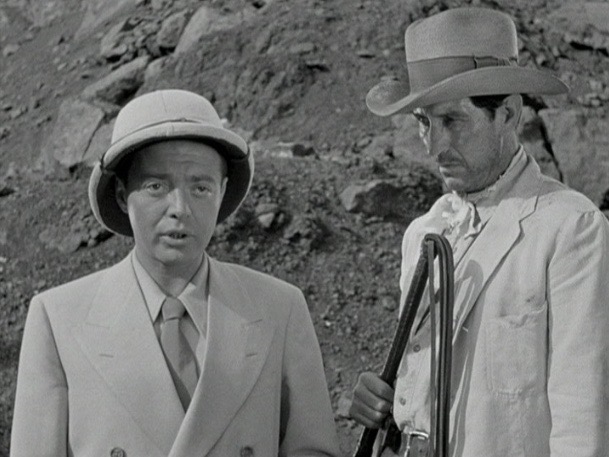
Island of Doomed Men is a 1940 Columbia B-feature notable mainly for its star, Peter Lorre.

Mark Sheldon (Robert Wilcox) has just started work as an undercover agent for the U.S. government. He is now Agent 64 and his first assignment is to work with Agent 46 on what is proving to be a difficult case. Agent 46 just has time to tell Sheldon that their target is a man named Stephen Danel (we will soon find out that Danel is played by Peter Lorre) and and that Danel is working some mysterious new racket. Having imparted this scanty information Agent 46 is shot dead through a window by an unknown gunman.

Sheldon is caught by the police leaving the scene and is arrested, charged with the murder and convicted. He is sent to prison. His first case has ended in disaster and the government doesn’t lift a finger to help him out.

There is someone who is willing to help Mark Sheldon. Stephen Danel is a noted philanthropist. He helps a lot of convicts. He arranges parole for them. They are released into his custody. They are then taken to his private island. There they will be offered good honest work in pleasant conditions, free from any temptation to return to crime.

At least that’s what the Parole Board thinks. In reality Danel’s private island is a slave island. The parolees are kept in appalling conditions and worked until they die. Discipline is brutal, enforced by Captain Cort (Charles Middleton, yes the Emperor Ming himself from the Flash Gordon serials).

Danel’s wife Lorraine (Rochelle Hudson) is more or less a prisoner as well, albeit a prisoner kept in luxury. She married Danel because she wanted security and a comfortable life, and she has had three years in which to regret her decision.

Lorraine only met Sheldon briefly when he arrived on the island but she’s become rather obsessed by him. Maybe it’s love at first sight, or maybe she just thinks Sheldon can help her to escape.

Sheldon still takes his government agent job seriously. He still has plans to bring Danel to justice but he can’t do that as a prisoner. He has concluded that the only way to escape is by fomenting a rebellion amongst the slave parolees.

Robert Wilcox is a somewhat colourless hero. Rochelle Hudson as Lorraine is unfortunately dull and lifeless. Charles Middleton on the other hand is excellent as the cynical sadistic captain Cort.

Peter Lorre is of course the reason to watch this movie. He’s in fine form as the sinister diabolical criminal mastermind Danel. Lorre is smart enough not to overdo things. He knows he can make Danel much more terrifying by making him a man who is always rigidly under control, a man confident of his absolute power. Lorre is aiming for subtle menace and he achieves it.

What makes Lorre’s performance more effectively creepy is that he knows Lorraine hates him, he knows he can only keep her by making her more or less a prisoner, but he doesn’t care. She belongs to him and he intends to retain possession of her. This aspect of the movie, the suggestion that Danel wants submission rather than love, adds just a slight hint of kinkiness.

The plot has some decent twists but you really don’t want to think too much about this plot. Is it really credible that a government agency would recruit an agent and then let him be convicted of a crime and rot in prison? I’d have thought that treating your agents this way would led to serious morale problems. It’s also questionable whether there was ever enough evidence for a successful murder prosecution. And does the Parole Board really do nothing to check up on parolees? But there’s nothing more boring than an excessive concern about plot coherence.

This was 1940, with the Production Code at its strictest, so the sadism of Danel and Cort is severely muted which robs the movie of some of the impact it should have had.

Island of Doomed Men isn’t great but it’s a fun B-movie and Peter Lorre’s performance is sufficient reason to see it. Recommended.

Sunday, July 29, 2018

Three Strangers (1946)

Three Strangers is the kind of offbeat little movie that could only have been made in Hollywood in the 40s. It’s part film noir, part melodrama and part fantasy. And perhaps part fairy tale as well.

This 1940s Warner Brothers feature was directed by Jean Negulesco from a script co-written by John Huston. Since it involves a statue with possibly mystic but definitely mythic qualities and given the Huston connection it often gets compared to The Maltese Falcon. In fact it’s a very different type of movie.

In London in 1938 an elegant woman makes eye contact with a man on a crowded street. The man (played by Sydney Greenstreet) appears to a prosperous businessman of some sort. He follows her back to her flat. He presumably thinks she’s a high-class prostitute so he’s a little disconcerted when they reach the flat to find another man already there. The woman (played by Geraldine Fitzgerald) has a proposition for both men although it’s perhaps not what they were expecting.

The woman (her name is Crystal) has a statue of a Chinese goddess and she explains to them the legend that if on the eve of Chinese New Year three strangers make a wish the goddess will grant that wish. And tonight is the the eve of Chinese New Year. There’s one catch though. The three strangers must all make the same wish. What wish could three complete strangers have in common? The answer of course is money.

All three are, in various ways, in a jam. They are victims of fate. Or at least they think they’re victims of fate. Perhaps they’re victims of fatalism rather than fate, and perhaps that’s more deadly. All three believe that money would help to extricate themselves from their respective jams.

We soon discover that these three people are a good deal less respectable than they appeared to be. They are good at maintaining a facade but not so good at keeping their lives together.

Crystal is estranged from her husband. He has now returned from Canada but instead of asking her for a reconciliation (as she had convinced herself he was going to) he asks for a divorce. He has fallen in love with another woman. But Crystal has no intention of letting him go - she knows they’re destined to be together. She will pay any price to keep him, and use any methods no matter how ruthless, no matter how cruel.

Jerome K. Arbutny (Sydney Greenstreet) is a solicitor of impeccable and unblemished reputation. He is most certainly not a thief. After all it’s not stealing if you intend to pay the money back. So he didn’t really steal from a client’s trust account, in fact he was acting in the client’s best interests, if only that speculative share deal hadn’t gone sour. And it’s not as if he were acting irresponsibly - his sources had told him it as a sure thing.

Johnny West (Peter Lorre) has several weaknesses, the main one being booze. It’s not that he’s a nasty drunk. Not in the least. He’s really a very nice fellow, drunk or sober. But after a few drinks his judgment isn’t all it might be, and in any case he’s the sort of guy who allows fate to lead him where it will. Where it’s led him is into the middle of a murder case.

Arbutny’s need for money is direct. If he doesn’t have it quickly he is ruined. Crystal sees money as something that will strengthen her position with he husband, and if you’re a manipulative sort of person money always has its uses.

Johnny perhaps has less need of money than the other two, although money would be useful for buying alcohol and it would also allow him to provide for the young woman who is also mixed up in the murder case. Somewhat to his surprise he has discovered that the young lady in question is in love with him, and even more to his surprise he discovers that maybe his existence might have a purpose after all. While Johnny is a reckless but innocent chap caught up almost by accident in crime his girlfriend is an habitual criminal, but then she’s never met a man before who treated her decently and she’s not really bad.

So we have a series of characters all believing a bit too much in fate, and not really willing to break the cycle of fatalism. Can a winning sweepstakes ticket save them, or can they find something else of more value?

The plot is of course totally contrived, but it’s intended to be. This is an urban fairy tale and it doesn’t need to obey the tiresome rules of real life. The plot is unimportant - it’s what the characters can find within themselves that matters. And it works rather nicely. Of course it’s almost impossible to go wrong when you have Lorre and Greenstreet in the same movie. All three leads in fact are excellent, and Joan Lorring is equally good as Lorre’s sweet but none-too-honest girlfriend.

This is a fine example of 1940s Hollywood film-making at its best, a movie that provides a good deal of entertainment and touches some emotional chords as well. They really don’t make quirky movies like this any more, and more’s the pity. Highly recommended.

Sunday, December 17, 2017

Mr Moto’s Gamble (1938)

Mr Moto’s Gamble is the weakest of the Mr Moto films but it does have an interesting story behind, a story that does a great deal to explain why this movie doesn’t quite work.

Mr Moto’s Gamble started life as an entry in Fox’s hugely successful Charlie Chan series. It was going to be a boxing mystery entitled Charlie Chan at the Ringside. Unfortunately by this time the star of the Chan series, Warner Oland, was beginning to have a few problems. He was drinking and his marriage was breaking up. He was forgetting his lines and he was becoming temperamental. On the first day of shooting in January 1938 he walked off the set. Having been persuaded to continue the film, he walked off the set again. He insisted that production be moved to a different sound stage. Finally he walked off the set for a third time, never to return. This was, sadly, to be the end of his career (in August of that year he passed away).

Oland’s departure left Fox with a problem. They had a script that everybody was happy with. They had the sets ready to go. Some footage had already been shot. The studio was reluctant simply to scrap the film. The solution they came up with was to turn Charlie Chan at the Ringside into a Mr Moto film. They had already made two Mr Moto movies which had been extremely successful. It all seemed like a good idea.

The trouble was that Charlie Chan and Mr Moto are very different characters, and the Chan and Moto movies have an entirely different flavour. Mr Moto is not a straightforward detective. In the novels by John P. Marquand (which I highly recommend) Moto is a Japanese spymaster. In the movies he becomes an Interpol agent but it’s still quite clear that Moto is a man with connections in the intelligence community (in fact he probably has connections in the intelligence communities of several different countries). Mr Moto does not investigate routine murder cases. His cases either involve espionage in some form or at the very least they have some hint of international intrigue to them. Mr Moto is a slightly mysterious figure and there’s a touch of ambiguity to his character. He is also something of an action hero, and he can be quite ruthless. In other words he’s nothing at all  like Charlie Chan and the Mr Moto movies are nothing like the Chan movies.

The problem here is that Mr Moto’s Gamble has a plot that is very much a Charlie Chan sort of plot. The whole movie still feels like a Chan movie. And Mr Moto just doesn’t quite fit in. Peter Lorre as Moto tries hard but he’s just not given enough Mr Moto type things to do and his performance falls just a little bit flat.

Another legacy of the film’s origin is the presence in the cast of Keye Luke, playing Charlie Chan’s son Lee! This also doesn’t quite work out. When Mr Moto is on a case he is the quintessential loner. Given the types of cases he usually deals with this is understandable - he has to play his cards very close to his chest. Moto has absolutely no need whatsoever for a sidekick. In this movie he is given two. Not just Chan Junior but also a kleptomaniac ex-boxer turned trainee criminologist named Wellington (Maxie Rosenbloom). They both provide comic relief, and they provide too much of it, although Wellington’s kleptomania does at least play a role in the plot.

The plot involves a boxing match that may or may not have been rigged but that results in the death of one of the fighters. Moto immediately realises the death was no accident. It was murder. There were some huge and very suspicious bets placed on the fight, by a variety of crooked gamblers all of whom seem to be trying to double-cross each other. It’s not a bad story and would have made an excellent Chan film.

There is of course a romantic sub-plot, in fact a romantic triangle involving boxer Bill Steele (Dick Baldwin), spoilt rich girl Linda Benton (Jayne Regan) and feisty girl reporter Penny Kendall (Lynn Bari).

The supporting cast is quite strong and includes (in a very minor role) Lon Chaney Jr. Bernard Nedell impresses as a very smooth but sinister gambler.

Lynn Bari is probably the standout performer here. She’s lively and vivacious and she manages the feisty girl reporter thing without being irritating.

As I mentioned earlier Peter Lorre is hampered by the necessity of having to play Moto as if he’s Charlie Chan, and to make things worse he’s stuck with dialogue written for Chan.

The first two Mr Moto films were directed by Norman Foster. James Tinling directed Mr Moto’s Gamble and it lacks the style and pace of Foster’s efforts.

Fox’s DVD presentation is more than satisfactory. The transfer is extremely good. There’s a brief but fascinating featurette detailing the movie’s troubled production history.

Mr Moto’s Gamble is reasonably entertaining but it does not have the feel of a Moto film and hardcore Moto fans are likely to be a little disappointed. So this one is recommended, but with reservations.

Thursday, October 15, 2015

Mysterious Mr Moto (1938)

Mysterious Mr Moto was the fifth of the eight 20th Century-Fox Mr Moto films starring Peter Lorre as the great Japanese detective. The movies were inspired by the novels of John P. Marquand. Mysterious Mr Moto was released late in 1938.

When we first see Mr Moto he is escaping from the notorious French prison on Devil’s Island in French Guiana, accompanied by the smooth but sinister Paul Brissac (Leon Ames). Has Mr Moto turned to crime? Certainly not. He is working undercover for Interpol (referred to in the movie as the International Police) masquerading as a Japanese murderer. After their escape Brissac heads to London where he has important business to attend to. Moto manages to persuade him that what he will really need in London is a reliable Japanese houseboy who happens to be something of a genius at mixing cocktails.

Moto is on the trail of the infamous League of Assassins, a kind of international version of Murder Incorporated but with vague and unspecified political affiliations. The next target of the League of Assassins is to be Czech steel magnate Anton Darvak (Henry Wilcoxon). Darvak’s firm has invented a new process that is of extreme interest to various armaments manufacturers but Darvak is a pacifist who refuses to allow the process to be used for military purposes. The League intends to force his hands. Darvak has been threatened with death but being an idealistic pacifist he is unwilling to take such threats seriously.

Mr Moto obviously has to protect Darvak but it’s rather difficult to protect a man who stubbornly refuses to admit he needs protection. Moto also has to uncover the man behind the League of Assassins and smash their organisation. He can rely on one trusted associate, the beautiful Eurasian Lotus Long who is also an undercover International Police agent. It is a race against time - Darvak is scheduled to be assassinated at 3 pm on the following day.

In the books Moto is a Japanese master spy. In the films he is essentially a police detective although clearly he specialises in cases that involve international intrigue and counter-espionage. The Mr Moto of the films is also more of an action hero, being a formidable judo expert (something that is mentioned in passing in the novels). In the books it is clear that Moto comes from a noble (and presumably samurai) family. This is given less emphasis in the movies although there are hints of it. In both the books and the movies Moto is obviously a highly educated man.

One of the amusing things about this movie is the way Mr Moto usually appears to be a mild-mannered harmless little man who speaks excruciating broken English but every now and then (such as the times when he consults with Sir Charles Murchison at Scotland Yard) he lets the mask slip and we see the real Moto - a very shrewd and dangerous man who speaks excellent English. Appearing to be a rather foolish and insignificant little doormat is an essential part of Moto’s method.

The Moto series gave Peter Lorre a rare chance not just to play a hero but to play a genuine action hero. He clearly relished this opportunity and he does a marvellous job. Lorre’s slight build and air of physical lassitude combine to make the action sequences a kind of in-joke - by now the viewers who have watched the four previous films know that anyone who dismisses Moto as a joke is likely to have an unpleasant surprise when he calmly and methodically takes them apart with his judo. Lorre plays Moto as a quiet gentle but very intelligent man who is capable of killing very efficiently should the need arise.

Unlike the other celebrated B-movie series with an Asian hero, Charlie Chan, the Mr Moto movies belong more to the thriller genre. Moto is closer to being a secret agent than a mere detective. Most of the movies deal at least indirectly with international affairs and conspiracies. Moto is more of a precursor to the heroes of later spy adventure movies (and like James Bond he has a taste for elegant and sophisticated living).

Norman Foster directed and co-wrote most of Mr Moto films as well as directing several of the Sidney Toler Charlie Chan movies. He had the ability to bring movies in on time and on budget which is course the prime requirement for a director of B-movies but Foster always added a bit of extra style and panache. His shot compositions are always very sound. His B-pictures were definitely a cut above the routine standard of such productions. Mysterious Mr Moto is also pleasingly fast-paced.

Mysterious Mr Moto is included in the first of the two Mr Moto boxed sets. Fox have done their usual fine job with the film getting a lovely transfer. The one significant extra is a rather interesting brief documentary on the intriguing career of director Norman Foster from Mr Moto to Disney via Mexico and Orson Welles.

I should add in passing that Marquand’s Mr Moto novels such as Your Turn, Mr Moto are not only very much worth reading but also provide an interesting contrast with Mr Moto being a rather different character compared to his film incarnations.

Mysterious Mr Moto is splendid entertainment. Moto himself is a fascinating blend of the cerebral master detective and the secret agent action hero. Lorre is as compulsively watchable as always. Highly recommended.

Friday, March 28, 2014

The Verdict (1946)

The Verdict, made by Warner Brothers in 1946, was Don Siegel’s first feature film as director. It was based on Israel Zangwill’s classic 1891 locked-room mystery The Big Bow Mystery. Although some have classified The Verdict as film noir its claims to that status are  rather dubious, although it does have some rather dark moments. It’s one of the many memorable movies that Sydney Greenstreet and Peter Lorre made together during the 1940s, and this time they share star billing.

The movie is set in London in the 1890s. Superintendent Grodman (Sydney Greenstreet) gets a nasty surprise right at the beginning of the film when he discovers that a man who was hanged a few hours earlier at Newgate Prison was in fact innocent. Grodman’s case against the man was based on circumstantial evidence although at the time the case seemed convincing enough. It was certainly enough to persuade a jury to convict. 

Grodman’s distinguished career is now in ruins. He is forced into retirement and to rub salt into the wound his arch-rival, Chief Inspector Buckley (George Coulouris), gets his job.


Grodman has certainly not forgotten the case. He continues to investigate the matter as a private citizen, with some help from his friend Victor Emmric (Peter Lorre), a rather dissolute but engaging artist.

The murder victim had been Hannah Kendall and when her nephew is murdered it seems obvious enough that the crimes are linked, although the exact nature of the linkage remains uncertain. Discovering the link proves to be beyond the meagre powers of the newly promoted Superintendent Buckley. Grodman however is confident that he can solve both crimes.

This is not just a locked-room mystery but also a psychological murder mystery, an aspect of crime in which Grodman has a particular expertise.


There are plenty of red herrings although the ultimate solution is really the only possible one. Screenwriter Peter Milne made quite a few changes in Zangwill’s story but his script is still satisfying as both locked-room puzzle and psychology mystery.

The setting provides the opportunity for the movie to indulge rather lavishly in the fogs for which London was famous (famous in detective stories at least). The gaslight and fog atmosphere works well. The movie comes across as a gothic mystery with a hint of film noir.

This was Don Siegel’s first feature but he already seems very assured.


Sydney Greenstreet gives one of his best performances as the indefatigable Grodman. Peter Lorre is in full-on Peter Lorre mode and his performance is as always delightfully offbeat. Both great actors who were even better when working together - they played off each other so well. The slightly unlikely friendship between Grodman and Emmric is one the movie’s great strengths. They’re both ambiguous and complex characters, and both actors were extremely good at portraying ambiguity and complexity in nicely subtle ways.

In 1946 Greenstreet and Lorre were at the height of their popularity and had by this time made the transition to full-fledged stardom. Warner Brothers considered them (quite rightly) to be capable of carrying an A-picture.

Joan Lorring has fun as a music hall singer who may (or may not) hold the key to the solution.


The Warner Archive made-on-demand DVD offers a fairly good transfer, without extras. 

The Verdict is one of those movies that should appeal to just about all fans of classic movies. If you enjoy murder mysteries, if you enjoy gothic movies, if you enjoy film noir - this one has all bases covered. Add to that Sydney Greenstreet and Peter Lorre at their top of their form and you have a surefire winner. Highly recommended.

Monday, December 23, 2013

Mr Moto Takes a Chance (1938)

Mr Moto Takes a Chance was the fourth of the eight Mr Moto films made by 20th Century-Fox in the late 1930s. They were B-movies but they were extremely popular and they provided Peter Lorre with the launching pad for his much more successful career with Warner Brothers in the 40s.

Lorre was initially rather pleased by the opportunity these films offered him to play a hero for a change but he became increasingly frustrated by Fox’s refusal to increase his salary. Given the commercial success of the films he felt, quite reasonably, that he deserved a salary that reflected that success. He was also frustrated by Fox’s unwillingness to offer him the range of roles that he needed in order to establish himself as a genuine Hollywood  star.

The Mr Moto movies might seem to bear a superficial resemblance to the equally successful Charlie Chan and Mr Wong movies but in fact they were rather different. Mr Moto does play the sleuth at times but in reality he is a more of a secret agent than a detective. The films themselves fit more into the thriller genre than the mystery genre and unlike Charlie Chan and Mr Wong Mr Moto is a genuine action hero. He may look like a harmless and rather bookish Japanese gentleman but villains who make the mistake of taking him at face value often have cause to regret their error of judgment when the discover his rathe formidable skill at jiu-jitsu. There is also a touch of ruthlessness to Mr Moto that sets him apart from Charlie Chan and Mr Wong.


Mr Moto is also a slightly ambiguous character. He is an agent of the Japanese government who seems to find himself working unofficially in the interests of the British and American governments but there is always a touch of ambivalence as to where his ultimate loyalties lie.

Mr Moto Takes a Chance emphasises the secret agent rôle of Mr Moto. The beginning of this film sees Moto working as an archaeologist in French Indochina, but the audience will have little doubt that this is merely a cover. When famed American aviatrix Victoria Mason (Rochelle Hudson) is forced to bale out of her stricken aircraft she finds herself in the tiny (mythical) kingdom of Tong Moi. The audience is well aware that her plane crash was no accident but was engineered by her although her purpose remains obscure. Mr Moto also does not know what she us up to but he certainly strongly suspects that her crash was no accident.

Victoria gets mixed up with two American newsreel cameramen, Marty (Robert Kent) and Chick (Chick Chandler), and they all become embroiled in a plot being hatched by the local high priest Bokor (George Regas). She also finds herself lined up to be the next wife of the  Rajah (J. Edward Bromberg). All three Americans are soon in trouble but Mr Moto has not been idle. He has been putting his famed skill at disguise to good use and manages to extricate Marty, Chick and Victoria from a number  of rather nasty situations.


The presence of a senior secret agent like Mr Moto in Tong Moi is no accident either. His presence suggests that there is something far more significant and far more sinister going on in Tong Moi than a mere attempt to unseat a petty princeling.

Whoever is pulling the strings and for whatever purpose it is soon clear that they will not shrink from murder, or even from a series of murders. Poison darts are flying about thick and fast and Mr Moto will need all his skills just to stay alive, much less accomplish his mission. And as well as carrying out his mission he will have to rescue the three Americans. That’s not part of his mission but Mr Moto is too much of a gentleman to allow a lady’s life to be endangered or to allow two bungling but well-meaning newsreel cameramen to be wantonly murdered.


There’s plenty of action (this is after all a spy thriller) and the story is an entertaining one handled with some skill by director Norman Foster. The sets are quite elaborate, being presumably (as was the so often the case with B-movies made by the major studios) left over from an earlier and bigger Fox production. The production values are quite high by B-movie standards and the action sequences are quite well done. This is a B-picture but it’s a fairly classy B-picture.

The curse of Hollywood B-movies of this era is the obligatory comic relief, provided in this case by Chick Chandler. He isn’t funny but fortunately he isn’t excessively irritating and the comic relief elements are kept within reasonable bounds and don’t really harm the movie. George Regas is an adequately menacing villain while J. Edward Bromberg has fun as bombastic but surprisingly shrewd and cunning Rajah. Robert Kent as Marty is bland but harmless. Rochelle Hudson makes an engaging and rather feisty heroine.


Peter Lorre is in fine form. He is always charming but we are never allowed to forget than underneath his amiable exterior Mr Moto is not a man to be trifled with. It’s difficult to think of a more unlikely action hero than Lorre but he carries off the rôle with ease.

This movie is one of four in the first of the two Mr Moto DVD boxed sets issued by Fox. The transfer is superb and the movie looks terrific. Extras are not overly lavish but they do include a brief but fairly informative documentary on Peter Lorre’s life and career. Fans of the Mr Moto movies have no cause for complaint with Fox’s treatment of these movies.

This is my favourite B-movie series from that era. Mr Moto is a much more offbeat and interesting character than the general run of B-movie heroes and Lorre is of course a considerable more accomplished actor than the usual stars of such movies. Mr Moto Takes a Chance is splendid entertainment and is highly recommended.

Monday, March 25, 2013

Rope of Sand (1949)

Paramount’s 1949 production Rope of Sand belongs to the sub-genre that I like to think of as tropical noir. Scorching heat and tropical madness take the place of rainswept city streets but the motivations of the characters are still recognisably noir.

Casablanca, The Bribe and Macau are the best-known American representatives of this sub-genre, although Julien Duvivier's 1937 French noir Pépé le Moko can perhaps be seen as the daddy of them all.

Rope of Sand introduces us to Mike Davis (Burt Lancaster), a big game hunter whose client, an Englishman named Ingram, wandered into the forbidden diamond zone, rigidly policed by the Colonial Diamond Company. Davis found Ingram in delirium, clutching a handful of diamonds he had found by pure luck. It was not good luck though, it was very bad luck. As Peter Lorre remarks at several points in the film, diamonds have an unfortunate effect of the human soul. Ingram would not live to enjoy his haul, and Davis would endure a savage beating from the company’s security chief, the viciously sadistic Commandant Vogel (Paul Henreid). Davis was eventually released, having refused to reveal the location of the diamonds. In fact he had buried the diamonds where he found Ingram. Davis does not believe in taking things that are not his.


Two years later Davis is back in Diamantstadt. And his attitude has changed. He was beaten even though he hadn’t stolen the diamonds. Now he wants those diamonds. And he knows where they are. The problem is how to get into the Forbidden Area and then out again, alive.

Martingale (Claude Rains), who runs the operation in this area for the Colonial Diamond Company, comes up with a clever scheme. After a chance encounter with a cheap Capetown tramp named Suzanne (Corinne Calvet), who tries to blackmail him, his plan takes shape. He will use Suzanne to try to get the information about the diamonds from Mike. As an added bonus, something that adds greatly to his enjoyment of the game, Martingale is able to set Mike Davies and Paul Vogel at each other’s throats. As useful as he is, Martingale despises the brutal Vogel.


The inevitable complication is that Suzanne genuinely falls in love with Mike. As Martingale bitterly remarks, the most corrupt women seem to have a stubborn decent streak in them that comes out at the most inopportune moments. Now Suzanne and Mike are planning to get the diamonds but their plans do not go smoothly. Mike is a noir hero. It’s not even as if he really wants the diamonds, he just wants revenge on Vogel, but he’s prepared to destroy himself in order to achieve that revenge. Suzanne knows it will end badly for Mike, but all her appeals cannot shake his stubborn resolve.

Burt Lancaster makes a fine self-destructive noir hero. He hated this film but at the time he was ambitious for meatier roles. Suzanne is the would-be femme fatale but she is betrayed from her femme fatale ways by her love. Corinne Calvet certainly has the looks and the glamour. The movie might have benefited from having a more experienced actress in such a key role, but her performance is quite adequate. Claude Rains is as suave and as subtly menacing as ever while Paul Henreid makes a memorable and very nasty villain. Same Jaffe is good in a small role as a drunken company doctor while Peter Lorre has fun with his role as a likeable crook who keeps trying to befriend Mike.


It’s these enjoyable performances that ultimately make this movie worthwhile and allow us to forgive its faults.

William Dieterle was an accomplished and versatile director and does a solid job. Charles Lang’s cinematography is a definite asset. The movie’s major weakness is the screenplay by Walter Doniger. Doniger’s characters are stereotypes and his plotting is all too predictable.


Olive Films’ DVD release is up to their usual high standards, but (as usual with this company) you will look in vain for any extras.

Rope of Sand is by no means a great film but for those who enjoy the combination of adventure and tropical noir and the great cast it’s worth a watch.

Monday, November 26, 2012

Thank You, Mr. Moto (1937)

Thank You, Mr. Moto (1937)Thank You, Mr. Moto was the second of 20th Century-Fox’s Mr Moto films. Released in 1937, it was directed by Norman Foster, as were most of the movies in this series, and of course starred Peter Lorre.

This time the Japanese-born agent of the International Police, Mr Moto, is on the track of the tomb of Genghis Khan (and the fabulous treasure it is rumoured to contain). And not surprisingly so are certain other people, people with few moral scruples. The key to finding the tomb is a series of seven 13th century Chinese scroll paintings. The Chung family owns six of the scrolls, but all seven are needed in order to reveal the location of the tomb. Prince Chung does not want anyone to find the tomb and desecrate it, but Mr Moto has been ordered to find it.

A young American woman in Peking, Eleanor Joyce (Jayne Regan), finds herself caught up in the search for the scrolls as well. Her father is a collector of Chinese antiquities with a particular fondness for Chinese scroll paintings. He knows nothing of the legend that these particular seven paintings contain a secret meaning, and Eleanor’s interest in the paintings is purely aesthetic.

Thank You, Mr. Moto (1937)

Colonel Tchernov’s interest in the paintings is far from aesthetic. He is prepared to kill to get them, in fact he is prepared to kill Prince Chung, but Mr Moto intervenes. Despite their very different agendas Mr Moto and Prince Chung respect each other and both are men to whom honour is all-important and Mr Moto will find himself facing an ethical dilemma as a result.

Eleanor has attracted the romantic attentions of a young American diplomat, Tom Nelson (Thomas Beck). Both Eleanor and Tom will find themselves in great danger as the unscrupulous gang in pursuit of Genghis Khan’s treasure lay their perfidious plots.

Thank You, Mr. Moto (1937)

Peter Lorre had well and truly settled into the role by now and he’s clearly enjoying himself. Mr Moto is not a man who relies entirely on brainpower to resolve his cases - he’s quite capable of playing the action hero as well, and Lorre faces this challenge with considerable elan. Lorre was keen to take on this role which gave him the chance to be both a hero and a very likeable character as well, a welcome change of pace for the actor who was starting to get stereotyped in sinister roles. Mr Moto is a man of great charm and Lorre brings a surprising warmth to his performance, as well as sly humour.

The supporting cast is quite acceptable by B-movie standards. John Carradine is amusing as a crooked dealer in Chinese antiquities.

Thank You, Mr. Moto (1937)

Norman Foster handles his directing task with a far amount of dash - this movie moves along at a pleasingly brisk pace. One of the great strengths of the studio system was the capability of the studios to make B-movies with fairly high production values and Thank You, Mr. Moto never looks shoddy.

There’s a nice mix of action and suspense and the movie is thankfully free of the unnecessary comic relief that was unfortunately such a feature of 1930s and 1940s crime B-movies.

Thank You, Mr. Moto (1937)

This film is one of four included in the first of the two Mr Moto DVD boxed sets issued by Fox. The transfers are excellent and the movies include a few extras as well. These might have been relatively low-budget movies but they’re given a respectful treatment in this boxed set.

Thank You, Mr. Moto is terrific B-movie fun, a fine crime movie with a hint of international intrigue, and is highly recommended.

Tuesday, April 10, 2012

Think Fast, Mr. Moto (1937)

Think Fast, Mr. Moto (1937)

Think Fast, Mr. Moto was the first of the nine Mr Moto movies made by 20th Century-Fox in the late 30s featuring Peter Lorre as the great Japanese detective. They were B-movies, but well-made B-movies.

While the Mr Moto of the first of John P. Marquand’s novels is a spymaster in the film he becomes an amateur detective. In the movie he also acquires martial arts skills. Lorre was attracted to the role because he had grown tired of playing psychopathic crazies and liked the idea playing a hero for a change. And not just a hero, but an action hero!

Think Fast, Mr. Moto (1937)

Mr Moto is on the trail of smugglers, a trail that leads him from San Francisco’s Chinatown to Shanghai. The case involves murder as well as smuggling. Mr Moto, a master of disguise, has picked up some useful leads by going undercover as a disreputable diamond smuggler. On board the ship he befriends Bob Hitchings (Thomas Beck) a young American who is the son of the steamship line.

Hitchings has fallen for Gloria Danton, a glamorous young woman who has a secret. She is a White Russian, a woman without a country, travelling on a forged passport. The plot gathers steam when the travellers arrive in Shanghai and Mr Moto starts to close in on the leaders of the smuggling ring.

Think Fast, Mr. Moto (1937)

While it’s regarded as politically incorrect these days to have European actors playing Asian characters Think Fast, Mr. Moto cannot be accused of racist stereotyping. Mr Moto is no inscrutable Oriental. He is a brave, honourable and capable man who uses a mixture of intelligence and ju-jitsu to bring bad guys to justice but he carries a gun as well and he’s quite willing to use it. There are no two-dimensional Oriental villains in this movie and the Chinese police are portrayed as being efficient and honest.

Shanghai in the 20s and early 30s was one of the world’s most fascinating cities - dangerous, sophisticated and decadent - and is an ideal setting for a crime story with a hint of international intrigue. You could find any kind of entertainment in Shanghai and the movies makes the most of this with night-club and gambling club scenes and a generally exotic atmosphere, created quite effectively for a B-movie made entirely in Hollywood.

Think Fast, Mr. Moto (1937)

Lorre eventually grew bored with the Mr Moto movies, inevitable considering that he made no less than nine of them, but he clearly liked the character and he makes Mr Moto one of the most interesting of movie detectives. The support cast is quite adequate. Within the constraints of the limited budget director Norman Foster handles his task very professionally and doesn’t allow the pace to flag.

Think Fast, Mr. Moto (1937)

This is a very solid crime B-movie and I have no hesitation in recommending it.

The Fox DVD (included in the first of the Mr Moto boxed sets) is a superb transfer and includes an interview with stuntman Harvey Perry who was Peter Lorre’s stunt double and has very fond memories of working with Lorre.