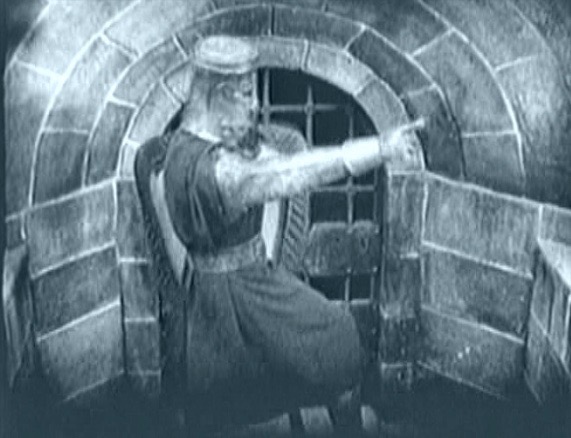
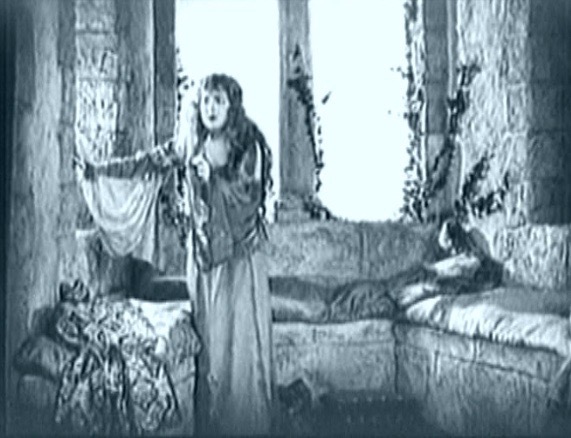
The Black Pirate is a 1926 Douglas Fairbanks swashbuckler so I was always going to enjoy this one.
Fairbanks conceived the idea, he wrote the story, he produced the movie and he starred and as in all his 1920s movies he was in every way the creative driving force here. His 1920s movies are totally Douglas Fairbanks movies.
A pirate movie was an obvious choice for Fairbanks. Rafael Sabatini’s classic pirate novel Captain Blood had been published in 1922 so the idea of a pirate who is actually a hero rather than a villain was very much an idea of the moment. It suited Fairbanks perfectly. Fairbanks however wanted a totally original story, so he wrote one.
Fairbanks felt that a pirate movie needed to be shot in colour. Colour had been around for a while. The very early colour technologies had huge problems and had given colour cinematography a bad name. By 1922 Technicolor had come up with a new process that seemed promising, and by 1926 Fairbanks felt that shooting his pirate movie using this process would be viable.
The movie begins with an exceptionally brutal act of piracy, with most of the crew of the captured merchantman being slaughtered. In fact not just slaughtered, but blown to smithereens. There is one survivor. We don’t really know who this guy is but his name is Michel and he’s played by Douglas Fairbanks and he wants revenge.
He figures the best way to achieve that aim is to get himself accepted as a member of this crew of bloodthirsty cutthroats. That proves to be easy. Firstly he demonstrated that he can take on the toughest of the pirates in a sword fight and win. Then he proves that he can capture a ship single-handed. Now he’s not merely a member of the crew, he might soon be in a position to put himself forward as their leader.
Among the booty captured in their latest coup is a woman. She’s a princess and she’s played by Billie Dove. The current captain and his crew draw lots for her. The captain wins. We can imagine what her fate is going to be. Fairbanks persuades the crew that since the woman is a princess it would be smarter to hold her for ransom rather than letting the captain satisfy his lusts on her. So the stage is set for a power struggle between the current captain and Fairbanks. The stage is also set for a romance. We know that Fairbanks and the princess will fall for each other.
Movies shot in early versions of Technicolor have a very distinctive look. It was a rather crude technology that was unable to reproduce all colours successfully. Earth tones and flesh tones look good, sombre reds look good, blue and green tones look somehow wrong and it really couldn’t do yellow at all. To get reasonably good results required enormous skill. Early Technicolor could work very well in horror movies such as Mystery of the Wax Museum. It gave such movies the right kind of weird other-worldly look. The Black Pirate has an interesting look but it is rather artificial. Since the movie is a kind of fantasy it works after a fashion but the effect can be a bit distracting until you get used to it.
Fairbanks ended up being disappointed by the results and decided not to make any more movies in colour.
On the other hand this is a truly spectacular movie. The budget was generous to say the least. The full-size ship sets look great. The miniature ships used for the ocean scenes look impressive. All the sets are great.
The action climax includes underwater scenes and is clever and crazy and great fun.
Fairbanks is of course excellent. When you watch his stunts, which would do credit to an Olympic athlete, bear in mind that he was a 43-year-old chain-smoker. And he really did do the stunts himself. He also has that distinctive Fairbanks mischievous charm.
Billie Dove doesn’t have to do much apart from looking frightened and looking like a princess but she does both those things successfully.
There’s a memorable evil scheming villain.
There are also some quite brutal moments, such as a pirate casually wandering up to a bound prisoner and running him through with a sword just for the the pleasure of killing. This was of course long before such horrors as the Production Code were even thought of. It’s also made crystal clear that, if Michel cannot intervene successfully, the princess is to become a sexual plaything for the pirates.
The Black Pirate is a fine swashbuckler. It’s a genre that Fairbanks largely invented and it suited him perfectly. There were other good silent pirate movies and later sound films such as Captain Blood would surpass The Black Pirate but this was an important pioneering effort that is still hugely entertaining today. Highly recommended.
The Cohen Films Blu-Ray looks terrific. Don’t be put off by the colours - early Technicolor is supposed to look like this. The audio commentary offers some genuinely fascinating details not just about the production but also about cool stuff like the history of colour in early feature films and the evolution of movie sword-fighting. Other extras include outtakes. It’s an excellent Blu-Ray presentation.
Showing posts with label swashbucklers. Show all posts
Friday, June 14, 2024
Sunday, October 29, 2023
The Pirates of Capri (1949)
The Pirates of Capri is an oddity in Edgar G.Ulmer’s career as a director but then when you think about it his entire career was full of oddities. Usually extremely interesting oddities. The Pirates of Capri is a swashbuckling adventure. It’s an Italian-American co-production shot in Italy.
It is 1798 and a warship is on its way to Naples carrying a shipment of arms, the fiancée of the Count of Amalfi and a troupe of acrobats. The acrobats are actually pirates and they seize the ship. The pirates are led by the notorious masked Captain Sirocco.
Captain Sirocco (Louis Hayward) is in fact the Count of Amalfi. In his Sirocco guise he is a handsome dashing very masculine pirate. In his Count of Amalfi guise he is a fop and a fool.
Of course this is hardly an original idea. It’s the same idea behind the Zorro books and movies. And Zorro was just a riff on Baroness Orczy’s the Scarlet Pimpernel. What matters with such dual rôles is finding an actor who can be equally convincing as both fop and hero. Is Louis Hayward up to the job? The answer is a resounding yes.
The pirates are not regular pirates. They’re revolutionaries seeking to overthrow the government of the Queen of Naples. There’s an interesting split in the ranks of the revolutionaries. Sirocco is a moderate. He wants to keep the queen on her throne. He just wants to get rid of her government, and mostly he wants to get rid of the vicious sadistic chief of police, Baron Holstein (Massimo Serato). He wants to avoid a bloodbath. The extreme revolutionaries want a bloodbath and they model themselves on the French revolutionaries so they’d be quite happy to lop off the queen’s head.
There’s a romantic complication. The Count of Amalfi’s intended bride is Countess Mercedes Villalta de Lopez (Mariella Lotti). She’s not keen on marrying the foolish count of Amalfi. Although initially horrified by Sirocco she has started to lose her heart to him. He’s the kind of action hero that any girl would fall for. Of course she has no idea that the Count of Amalfi and Sirocco are the same man.
There are plenty of fairly full-blooded action scenes. There’s a cruel villain who likes to torture young women. There’s the whole fighting for freedom thing (with a few twists). And there’s a suitably heroic hero. It’s a formula that should work, and it does.
On this occasion Ulmer has a reasonable budget to work with and it shows. The movie is visually reasonably impressive.
Louis Hayward is in splendid form. The other cast members are all quite competent.
The movie is fairly sympathetic to the revolutionaries, or at least to moderate revolutionaries such as Sirocco. Politically Sirocco falls halfway between being a reformist and a true revolutionary. You don’t really have to worry too much about the politics. The movie is perhaps a little naïve in that department anyway. This film can be enjoyed as a straightforward romantic swashbuckler.
The Pirates of Capri is energetic fun. It’s Ulmer’s only swashbuckler although a few years later he did attempt an historical epic with Hannibal, an unjustly neglected movie.
Louis Hayward’s performance and Ulmer’s lively direction make The Pirates of Capri an enjoyable experience. Highly recommended.
This is a hard-to-find movie. I came across a French DVD from Artus Films which includes the English version (with removable subtitles) and it offers an acceptable transfer. There are no extras. That DVD is still in print and it’s your best chance of seeing this movie.
It is 1798 and a warship is on its way to Naples carrying a shipment of arms, the fiancée of the Count of Amalfi and a troupe of acrobats. The acrobats are actually pirates and they seize the ship. The pirates are led by the notorious masked Captain Sirocco.
Captain Sirocco (Louis Hayward) is in fact the Count of Amalfi. In his Sirocco guise he is a handsome dashing very masculine pirate. In his Count of Amalfi guise he is a fop and a fool.
Of course this is hardly an original idea. It’s the same idea behind the Zorro books and movies. And Zorro was just a riff on Baroness Orczy’s the Scarlet Pimpernel. What matters with such dual rôles is finding an actor who can be equally convincing as both fop and hero. Is Louis Hayward up to the job? The answer is a resounding yes.
The pirates are not regular pirates. They’re revolutionaries seeking to overthrow the government of the Queen of Naples. There’s an interesting split in the ranks of the revolutionaries. Sirocco is a moderate. He wants to keep the queen on her throne. He just wants to get rid of her government, and mostly he wants to get rid of the vicious sadistic chief of police, Baron Holstein (Massimo Serato). He wants to avoid a bloodbath. The extreme revolutionaries want a bloodbath and they model themselves on the French revolutionaries so they’d be quite happy to lop off the queen’s head.
There’s a romantic complication. The Count of Amalfi’s intended bride is Countess Mercedes Villalta de Lopez (Mariella Lotti). She’s not keen on marrying the foolish count of Amalfi. Although initially horrified by Sirocco she has started to lose her heart to him. He’s the kind of action hero that any girl would fall for. Of course she has no idea that the Count of Amalfi and Sirocco are the same man.
There are plenty of fairly full-blooded action scenes. There’s a cruel villain who likes to torture young women. There’s the whole fighting for freedom thing (with a few twists). And there’s a suitably heroic hero. It’s a formula that should work, and it does.
On this occasion Ulmer has a reasonable budget to work with and it shows. The movie is visually reasonably impressive.
Louis Hayward is in splendid form. The other cast members are all quite competent.
The movie is fairly sympathetic to the revolutionaries, or at least to moderate revolutionaries such as Sirocco. Politically Sirocco falls halfway between being a reformist and a true revolutionary. You don’t really have to worry too much about the politics. The movie is perhaps a little naïve in that department anyway. This film can be enjoyed as a straightforward romantic swashbuckler.
The Pirates of Capri is energetic fun. It’s Ulmer’s only swashbuckler although a few years later he did attempt an historical epic with Hannibal, an unjustly neglected movie.
Louis Hayward’s performance and Ulmer’s lively direction make The Pirates of Capri an enjoyable experience. Highly recommended.
This is a hard-to-find movie. I came across a French DVD from Artus Films which includes the English version (with removable subtitles) and it offers an acceptable transfer. There are no extras. That DVD is still in print and it’s your best chance of seeing this movie.
Labels:
1940s,
adventure,
edgar g. ulmer,
pirates,
swashbucklers
Saturday, July 8, 2023
The Adventures of Robin Hood (1938)
The 1938 The Adventures of Robin Hood starring Eroll Flynn was the second feature film recounting the legendary story of Robin Hood. It was preceded by the 1922 silent Robin Hood starring Douglas Fairbanks Sr (and several earlier short silent films). There have been countless subsequent Robin Hood movies but the 1922 and 1938 versions remain the best. Both are superb movies, with the 1938 version perhaps having a very slight edge (it’s certainly paced better than the 1922 version).
It offers not just Errol Flynn in swashbuckling hero mode but Basil Rathbone in super-villain mode. Plus Claude Rains being sly and sneaky and creepy and underhanded and duplicitous.
There’s not much point in saying too much about the plot. Everyone knows the basics of the story. Good King Richard (Richard Lionheart) has gone off on Crusade, leaving England in the care of a Regent. The king’s untrustworthy brother Prince John (Claude Rains) gets rid of the Regent, declares himself Regent and plans to make himself king. Prince John’s most important ally is the cruel and ruthless Guy of Gisborne (Basil Rathbone).
The people of England are mercilessly exploited by John and his supporters. The Saxons suffer the most under the rule of the Normans. The Saxon nobleman Robin of Locksley (Errol Flynn) is outlawed and assembles a private army in Sherwood Forest. He and Lady Marian (Olivia de Havilland) fall in love. Prince John’s supporters try to capture Robin by tempting him into an archery contest and later Lady Marian is accused of treason for aiding the notorious outlaw.
There are lots of narrow escapes and lots of action. The action sequences are exceptionally well handled.
This movie was shot in Technicolor and it looks lavish and expensive (because it was expensive).
Flynn was at his swashbuckling peak, and while there have been other fine swashbuckling stars no-one has ever quite equalled Flynn in those rôles. He could make a swashbuckling hero come to life. Basil Rathbone and Claude Rains are excellent. I’ve never been a great Olivia de Havilland fan but she’s very good here. The fine supporting cast includes Alan Hale as Little John.
Oddly enough when Warner Brothers first came up with the idea of a Robin Hood movie they had James Cagney in mind for the lead. That fell through and the project was shelved. By the time the idea was revived Captain Blood had made Errol Flynn a huge star and he became the only possible choice.
Shooting the film in Technicolor was a late decision but a very good one. The Adventures of Robin Hood was always going to be a hit but making it in Technicolor ensured that it would be a gigantic hit.
William Keighley was hired to direct. Halfway through shooting he was replaced by Michael Curtiz (who probably should have been chosen in the first place). Curtiz’s arrival meant a change of cinematographers as well, with Sol Polito replacing Tony Gaudio.
The Adventures of Robin Hood is an object lesson in just how good old school effects could look in the late 30s. The matte paintings are superb. The movie is a mix of such effects and plenty of location shooting. The action scenes are inspired.
When you watch it you have to remember that it was until the1922 Fairbanks movie that all the elements that we now think of as comprising the Robin Hood legend were brought together, and in the 1938 version these elements still seemed fresh. Scenes such as the quarter-staff battle between Robin and Little John and the archery contest have been endlessly copied, homaged, referenced and parodied but in 1938 they had not yet become clichés.
The Robin Hood story as we now know it is an amalgam of mediæval ballads, 15th and 16th century embellishments and additions made by 18th and 19th century writers such as Sir Walter Scott (particularly his great novel Ivanhoe). Many of the most familiar elements were not present in the earliest mediæval ballads (Maid Marian was a very late addition and King Richard and Prince John played no part in the early versions of the tale). This 1938 movie assembles all these elements into a very satisfying whole.
Errol Flynn at the top of his game, spectacular visuals and dynamic pacing make The Adventures of Robin Hood one of the great adventure movies, and the definitive Robin Hood movie. Highly recommended.
This movie is very easy to get hold of on both DVD and Blu-Ray.
It offers not just Errol Flynn in swashbuckling hero mode but Basil Rathbone in super-villain mode. Plus Claude Rains being sly and sneaky and creepy and underhanded and duplicitous.
There’s not much point in saying too much about the plot. Everyone knows the basics of the story. Good King Richard (Richard Lionheart) has gone off on Crusade, leaving England in the care of a Regent. The king’s untrustworthy brother Prince John (Claude Rains) gets rid of the Regent, declares himself Regent and plans to make himself king. Prince John’s most important ally is the cruel and ruthless Guy of Gisborne (Basil Rathbone).
The people of England are mercilessly exploited by John and his supporters. The Saxons suffer the most under the rule of the Normans. The Saxon nobleman Robin of Locksley (Errol Flynn) is outlawed and assembles a private army in Sherwood Forest. He and Lady Marian (Olivia de Havilland) fall in love. Prince John’s supporters try to capture Robin by tempting him into an archery contest and later Lady Marian is accused of treason for aiding the notorious outlaw.
There are lots of narrow escapes and lots of action. The action sequences are exceptionally well handled.
This movie was shot in Technicolor and it looks lavish and expensive (because it was expensive).
Flynn was at his swashbuckling peak, and while there have been other fine swashbuckling stars no-one has ever quite equalled Flynn in those rôles. He could make a swashbuckling hero come to life. Basil Rathbone and Claude Rains are excellent. I’ve never been a great Olivia de Havilland fan but she’s very good here. The fine supporting cast includes Alan Hale as Little John.
Oddly enough when Warner Brothers first came up with the idea of a Robin Hood movie they had James Cagney in mind for the lead. That fell through and the project was shelved. By the time the idea was revived Captain Blood had made Errol Flynn a huge star and he became the only possible choice.
Shooting the film in Technicolor was a late decision but a very good one. The Adventures of Robin Hood was always going to be a hit but making it in Technicolor ensured that it would be a gigantic hit.
William Keighley was hired to direct. Halfway through shooting he was replaced by Michael Curtiz (who probably should have been chosen in the first place). Curtiz’s arrival meant a change of cinematographers as well, with Sol Polito replacing Tony Gaudio.
The Adventures of Robin Hood is an object lesson in just how good old school effects could look in the late 30s. The matte paintings are superb. The movie is a mix of such effects and plenty of location shooting. The action scenes are inspired.
When you watch it you have to remember that it was until the1922 Fairbanks movie that all the elements that we now think of as comprising the Robin Hood legend were brought together, and in the 1938 version these elements still seemed fresh. Scenes such as the quarter-staff battle between Robin and Little John and the archery contest have been endlessly copied, homaged, referenced and parodied but in 1938 they had not yet become clichés.
The Robin Hood story as we now know it is an amalgam of mediæval ballads, 15th and 16th century embellishments and additions made by 18th and 19th century writers such as Sir Walter Scott (particularly his great novel Ivanhoe). Many of the most familiar elements were not present in the earliest mediæval ballads (Maid Marian was a very late addition and King Richard and Prince John played no part in the early versions of the tale). This 1938 movie assembles all these elements into a very satisfying whole.
Errol Flynn at the top of his game, spectacular visuals and dynamic pacing make The Adventures of Robin Hood one of the great adventure movies, and the definitive Robin Hood movie. Highly recommended.
This movie is very easy to get hold of on both DVD and Blu-Ray.
Friday, August 19, 2022
Robin Hood (1922)
The 1922 Robin Hood with Douglas Fairbanks was not the first screen version of the Robin Hood story but it’s the one that made the legendary outlaw into a swashbuckling cinematic icon. It made Fairbanks an even bigger star than he already was. And it includes all of the elements that we now associate with the legend.
King Richard I, Richard Lionheart (Wallace Beery), sets off on a Crusade to the Holy Land. His brother Prince John (Sam De Grasse) will act as regent during his absence. Richard will be accompanied by his closest friend, the Earl of Huntingdon (Fairbanks). Huntingdon has just fallen in love with Lady Marian Fitzwalter (Enid Bennett) but he leaves her behind to go off on Crusade. Prince John proves to be a cruel tyrant. And a lustful one. He wants Lady Marian. Marian sends a message to Huntingdon, telling him of the horrors inflicted on England by Prince John. Huntingdon deserts from the Crusader army to return to England, only to find that Marian is dead.
Huntingdon becomes the leader of an outlaw gang based in Sherwood Forest. He becomes known as Robin Hood. They rob the rich to give to the poor and they work towards preserving King Richard’s throne for him.
This is the popular modern version of the legend, with Robin Hood being a dispossessed aristocrat and being as much concerned with King Richard’s throne as he is with helping the poor.
King Richard I, Richard Lionheart (Wallace Beery), sets off on a Crusade to the Holy Land. His brother Prince John (Sam De Grasse) will act as regent during his absence. Richard will be accompanied by his closest friend, the Earl of Huntingdon (Fairbanks). Huntingdon has just fallen in love with Lady Marian Fitzwalter (Enid Bennett) but he leaves her behind to go off on Crusade. Prince John proves to be a cruel tyrant. And a lustful one. He wants Lady Marian. Marian sends a message to Huntingdon, telling him of the horrors inflicted on England by Prince John. Huntingdon deserts from the Crusader army to return to England, only to find that Marian is dead.
Huntingdon becomes the leader of an outlaw gang based in Sherwood Forest. He becomes known as Robin Hood. They rob the rich to give to the poor and they work towards preserving King Richard’s throne for him.
This is the popular modern version of the legend, with Robin Hood being a dispossessed aristocrat and being as much concerned with King Richard’s throne as he is with helping the poor.
Whether there really was a Robin Hood is very very doubtful. In early versions of the legend he is not an aristocrat but a simple farmer turned outlaw and the events take place some considerable time after Richard’s reign.
This was an awesomely expensive film. It was so expensive that no-one would finance it so Fairbanks did so out of his own pocket. Enormous sets were constructed. The castle is extraordinarily impressive. Everything is on the grand scale. There are hordes of extras.
The performances are in the typical silent movie style, but they’re not overly exaggerated. And in a movie such as this larger-than-life performances seem perfectly appropriate.
The physicality of Fairbanks is impressive. He was middle-aged and a chain smoker but unbelievably athletic and did his own stunts (and there are some truly spectacular stunts with the sliding down the tapestry scene being a highlight). He really is convincing as a hero in the epic style.
The main problem is that the film is too long, and spends too much time on the backstory. Of course that might well make it appeal to audiences today who are accustomed to excessively long movies and excessively detailed origin stories.
Once we get past the backstory the movie really livens up with some stirring action scenes.
I’ve always through of Robin Hood’s Merrie Men being perhaps a few dozen men, but in this movie Robin Hood has hundreds of followers. He’s the leader of an outlaw army rather than an outlaw band.
All the familiar characters are there - Will Scarlett, Friar Tuck, Allan-a-Dale, Little John.
Of course the audience knows all along that Lady Marian is still alive - we saw her fake her death when she decided that that was the only way to escape the unwelcome attentions of Price John’s chief henchman (and the Earl of Huntingdon’s hated rival), Sir Guy Gisbourne. Lady Marian takes refuge in a nunnery, but she doesn’t become a nun. She is sure that Huntingdon will come back for her to claim her as his bride.
This is not the best of the Fairbanks swashbucklers. The Mark of Zorro for one is better, The Thief of Bagdad is much more visually stunning and The Gaucho is more interesting. But once you get past the overly slow first half Robin Hood offers pretty decent entertainment.
If you like swashbucklers and you like silent movies (or if you’re a Fairbanks fan) then it’s worth seeing. Recommended, but it is a bit long and a bit slow.
This was an awesomely expensive film. It was so expensive that no-one would finance it so Fairbanks did so out of his own pocket. Enormous sets were constructed. The castle is extraordinarily impressive. Everything is on the grand scale. There are hordes of extras.
The performances are in the typical silent movie style, but they’re not overly exaggerated. And in a movie such as this larger-than-life performances seem perfectly appropriate.
The physicality of Fairbanks is impressive. He was middle-aged and a chain smoker but unbelievably athletic and did his own stunts (and there are some truly spectacular stunts with the sliding down the tapestry scene being a highlight). He really is convincing as a hero in the epic style.
The main problem is that the film is too long, and spends too much time on the backstory. Of course that might well make it appeal to audiences today who are accustomed to excessively long movies and excessively detailed origin stories.
Once we get past the backstory the movie really livens up with some stirring action scenes.
I’ve always through of Robin Hood’s Merrie Men being perhaps a few dozen men, but in this movie Robin Hood has hundreds of followers. He’s the leader of an outlaw army rather than an outlaw band.
All the familiar characters are there - Will Scarlett, Friar Tuck, Allan-a-Dale, Little John.
Of course the audience knows all along that Lady Marian is still alive - we saw her fake her death when she decided that that was the only way to escape the unwelcome attentions of Price John’s chief henchman (and the Earl of Huntingdon’s hated rival), Sir Guy Gisbourne. Lady Marian takes refuge in a nunnery, but she doesn’t become a nun. She is sure that Huntingdon will come back for her to claim her as his bride.
This is not the best of the Fairbanks swashbucklers. The Mark of Zorro for one is better, The Thief of Bagdad is much more visually stunning and The Gaucho is more interesting. But once you get past the overly slow first half Robin Hood offers pretty decent entertainment.
If you like swashbucklers and you like silent movies (or if you’re a Fairbanks fan) then it’s worth seeing. Recommended, but it is a bit long and a bit slow.
Saturday, August 13, 2022
Sinbad the Sailor (1947)
Sinbad the Sailor is a 1947 RKO swashbuckler and the studio decided to spend some real money on it. It’s in glorious Technicolor and looks stunning. And it stars Douglas Fairbanks Jr and Maureen O’Hara.
The tales of Sinbad were among the most entertaining in that fabulous collection of eastern tales, The Thousand Nights and One Night (more commonly known as the Arabian Nights). The Arabian Nights became a major inspiration for swashbuckling adventure movies and there have been countless Sinbad movies. What’s surprising is that pretty much all of them are worth seeing.
Sinbad is a great sailor, trader, explorer and adventurer. We also get the impression that he is an accomplished and inveterate liar. But a charming one.
Sinbad and his sidekick Abbu board a fine sailing ship which was headed for the rocks and certain destruction. The ship’s crewmen are all dead. Sinbad intends to claim the ship by the law of salvage. But someone else wants that ship, a woman. A beautiful woman, although (as we will soon discover) possibly a dangerous woman. She is Shireen (Maureen O’Hara).
Sinbad found a chart on the ship, which he believes will lead him to the fabled island where the lost treasure of Alexander the Great can be found. He also notices a design on the window of the captain’s cabin which matches a medallion he has worn for years. Sinbad is convinced that he must have this ship and must find the lost island.
A major theme of Islamic folk tales is destiny, or kismet. Sinbad believes he has found his kismet.
He’s fascinated by Shireen and tries to convince her to go with him. She vanishes and he heads for a port renowned as a heaven of villains and cut-throats. He has a suspicion that he will find Shireen there. And she is part of his kismet.
Whether he can trust Shireen is an open question. It’s unlikely. She is ambitious and avaricious. Of course Sinbad is pretty ambitious and avaricious as well.
The problem is that Sinbad has lost that chart. It’s possible that Shireen knows how to find the island, but she thinks that Sinbad knows. The villainous emir who owns Shireen thinks Sinbad knows. I’s possible that whoever does know how to find that island doesn’t know that he (or she) has that knowledge.
Sinbad, Shireen and the emir all want Alexander’s lost gold. There’s going to be lots of intrigue and we can expect some double-crosses.
We also expect action and we get plenty of that.
The great swashbuckling stars were of course Douglas Fairbanks Sr, Errol Flynn, Tyrone Power and Stewart Granger. Douglas Fairbanks Jr played only a handful of swashbuckling roles but he played them so well that he certainly deserves to be added to the list. He seems to have picked up a few valuable lessons from his father - in a swashbuckler never be afraid of going over-the-top. You just can’t be too melodramatic in these sorts of movies. And nobody could overact like Douglas Fairbanks Jr when he was in the right mood. As Sinbad he is certainly a rogue, maybe even a bit of a scoundrel at times, but he is the stuff of which heroes are made. In this movie he’s all manic energy.
And obviously you can’t go wrong with Maureen O’Hara as the female lead in a swashbuckler.
The standouts among the fine supporting cast are Anthony Quinn (as a deadly scheming emir) and Mike Mazurki. Not to mention Jane Greer in a bit part. Especially good is Walter Slezak as Melik, a clever barber who is probably quite untrustworthy but definitely useful.
Unfortunately Sinbad gets a comic relief sidekick, George Tobias as Abbu. He’s annoying but just about bearable.
This is a Sinbad story without magic or monsters which gives it a very different feel compared to the later movies with their Ray Harryhausen special effects. Sinbad does have a reputation as a magician but he’s really just a clever illusionist. This is a straight adventure film rather than a fantasy.
The Warner Archive DVD is barebones but looks terrific.
Sinbad the Sailor is a fine lively swashbuckler. The main reason to see it is Douglas Fairbanks Jr at the absolute top of his game. He really is superb. Highly recommended.
The tales of Sinbad were among the most entertaining in that fabulous collection of eastern tales, The Thousand Nights and One Night (more commonly known as the Arabian Nights). The Arabian Nights became a major inspiration for swashbuckling adventure movies and there have been countless Sinbad movies. What’s surprising is that pretty much all of them are worth seeing.
Sinbad is a great sailor, trader, explorer and adventurer. We also get the impression that he is an accomplished and inveterate liar. But a charming one.
Sinbad and his sidekick Abbu board a fine sailing ship which was headed for the rocks and certain destruction. The ship’s crewmen are all dead. Sinbad intends to claim the ship by the law of salvage. But someone else wants that ship, a woman. A beautiful woman, although (as we will soon discover) possibly a dangerous woman. She is Shireen (Maureen O’Hara).
Sinbad found a chart on the ship, which he believes will lead him to the fabled island where the lost treasure of Alexander the Great can be found. He also notices a design on the window of the captain’s cabin which matches a medallion he has worn for years. Sinbad is convinced that he must have this ship and must find the lost island.
A major theme of Islamic folk tales is destiny, or kismet. Sinbad believes he has found his kismet.
He’s fascinated by Shireen and tries to convince her to go with him. She vanishes and he heads for a port renowned as a heaven of villains and cut-throats. He has a suspicion that he will find Shireen there. And she is part of his kismet.
Whether he can trust Shireen is an open question. It’s unlikely. She is ambitious and avaricious. Of course Sinbad is pretty ambitious and avaricious as well.
The problem is that Sinbad has lost that chart. It’s possible that Shireen knows how to find the island, but she thinks that Sinbad knows. The villainous emir who owns Shireen thinks Sinbad knows. I’s possible that whoever does know how to find that island doesn’t know that he (or she) has that knowledge.
Sinbad, Shireen and the emir all want Alexander’s lost gold. There’s going to be lots of intrigue and we can expect some double-crosses.
We also expect action and we get plenty of that.
The great swashbuckling stars were of course Douglas Fairbanks Sr, Errol Flynn, Tyrone Power and Stewart Granger. Douglas Fairbanks Jr played only a handful of swashbuckling roles but he played them so well that he certainly deserves to be added to the list. He seems to have picked up a few valuable lessons from his father - in a swashbuckler never be afraid of going over-the-top. You just can’t be too melodramatic in these sorts of movies. And nobody could overact like Douglas Fairbanks Jr when he was in the right mood. As Sinbad he is certainly a rogue, maybe even a bit of a scoundrel at times, but he is the stuff of which heroes are made. In this movie he’s all manic energy.
And obviously you can’t go wrong with Maureen O’Hara as the female lead in a swashbuckler.
The standouts among the fine supporting cast are Anthony Quinn (as a deadly scheming emir) and Mike Mazurki. Not to mention Jane Greer in a bit part. Especially good is Walter Slezak as Melik, a clever barber who is probably quite untrustworthy but definitely useful.
Unfortunately Sinbad gets a comic relief sidekick, George Tobias as Abbu. He’s annoying but just about bearable.
This is a Sinbad story without magic or monsters which gives it a very different feel compared to the later movies with their Ray Harryhausen special effects. Sinbad does have a reputation as a magician but he’s really just a clever illusionist. This is a straight adventure film rather than a fantasy.
The Warner Archive DVD is barebones but looks terrific.
Sinbad the Sailor is a fine lively swashbuckler. The main reason to see it is Douglas Fairbanks Jr at the absolute top of his game. He really is superb. Highly recommended.
Monday, May 30, 2022
The Flame of Araby (1951)
The Flame of Araby is a 1951 swashbuckler from Universal starring Maureen O’Hara and Jeff Chandler. It’s pretty much a stock-standard representative of that genre but that’s no bad thing. Even the second-tier Hollywood swashbucklers of that era were usually decent entertainment. This one definitely is second-tier but it’s competently executed.
Jeff Chandler is Tamerlane, a Bedouin horse trader who has become obsessed by the idea of capturing a mighty black stallion that is leading a herd of wild horses. He almost succeeds but a woman on horseback gets in the way. Tamerlane is annoyed and gives her bottom a good spanking. This was actually a risky thing to do since the woman turns out to be the Princess Tanya. Princesses have been known to have men’s heads removed from their shoulders for subjecting them to such indignities. On the other hand if the stranger is well-built and good-looking then sometimes princesses don’t mind having their bottoms spanked. Princess Tanya doesn’t seem to mind at all.
Tamerlane and his sidekick are on their way to Tunis to sell a valuable mare. Princess Tanya soon discovers that she has big problems to face (much bigger problems than being spanked by a handsome Bedouin), Her father, the King of Tunis, has been suddenly taken ill and is dying. The King suspects that he has been poisoned.
The King makes his brother and heir Prince Medina promise to look after Princess Tanya but we know this is not going to happen because we only need one look at Medina to know he’s a bad ’un. Our fears prove to be well-founded. Medina intends to give Tanya in marriage to one of the very unpleasant cut-throat Barbarossa corsair lords of whom he is rather afraid. Medina is a villain motivated more by cowardice than ambition.
Tamerlane immediately gets on the wrong side of the pirates when he kills one of them in a quarrel over a wench. He didn’t even particularly want the wench in question. Now the pirates are after him.
Tanya is trying to find a way of getting out of the marriage Medina is planning for her. She will have to choose one of the two Barbarossa brothers and she’s horrified by the thought either way. Her plan is to tell them she’ll marry whichever of them wins a horse race. That’s a foolish plan since Barbarossa brothers own the two swiftest horses in the kingdom but Tanya is not a fool and there’s a bit more to her plan. The important thing is to persuade the brothers to accept her proposal, and they do accept.
From very early on you can predict everything that is going to happen in this movie. The script by Gerald Drayson Adams contains no surprises. That’s not necessarily a huge problem. A predictable plot well executed can make for a very entertaining swashbuckler. And this one is fairly well executed (technically at least) by director Charles Lamont.
If Tamerlane captures that stallion he’s going to have to tame it. And if he captures Princess Tanya he’s going to have to tame her as well. Of course it’s possible that she has plans to tame him, but she won’t want to tame him too much. Winning her will be a test of his manhood and Tanya clearly likes her men to be bold and masculine. That’s really what the entire story comes down to.
The biggest problem is that there’s a certain lack of spectacle. There is some spectacle but not quite enough. Mostly the movie looks like a B western. It looks like a handsome B western, not surprising with Russell Metty doing the cinematography. There’s perhaps also not quite enough action.
Maureen O’Hara was always solid in roles such as this, as long as you can accept an Irish redhead as an Arab princess. Jeff Chandler is an adequate hero.
You might think I became a bit obsessed by the spanking scene but in fact it’s the movie that is obsessed with it. It’s referred to over and over again throughout the movie. You could say it’s the core of the movie because that’s the point at which Tanya realises that Tamerlane is her kind of man, and he realises that she is his kind of woman. This is a very politically incorrect movie.
The Universal Vault Series DVD is fullframe which is quite correct.
I have a few problems with this movie. It’s really just a western rather than a swashbuckler and it lacks visual inspiration. It just isn’t in the same league as other similar swashbucklers of its era such as The Golden Blade or the excellent The Desert Hawk.
Maybe worth a rental if you’re a keen Maureen O’Hara fan.
Jeff Chandler is Tamerlane, a Bedouin horse trader who has become obsessed by the idea of capturing a mighty black stallion that is leading a herd of wild horses. He almost succeeds but a woman on horseback gets in the way. Tamerlane is annoyed and gives her bottom a good spanking. This was actually a risky thing to do since the woman turns out to be the Princess Tanya. Princesses have been known to have men’s heads removed from their shoulders for subjecting them to such indignities. On the other hand if the stranger is well-built and good-looking then sometimes princesses don’t mind having their bottoms spanked. Princess Tanya doesn’t seem to mind at all.
Tamerlane and his sidekick are on their way to Tunis to sell a valuable mare. Princess Tanya soon discovers that she has big problems to face (much bigger problems than being spanked by a handsome Bedouin), Her father, the King of Tunis, has been suddenly taken ill and is dying. The King suspects that he has been poisoned.
The King makes his brother and heir Prince Medina promise to look after Princess Tanya but we know this is not going to happen because we only need one look at Medina to know he’s a bad ’un. Our fears prove to be well-founded. Medina intends to give Tanya in marriage to one of the very unpleasant cut-throat Barbarossa corsair lords of whom he is rather afraid. Medina is a villain motivated more by cowardice than ambition.
Tamerlane immediately gets on the wrong side of the pirates when he kills one of them in a quarrel over a wench. He didn’t even particularly want the wench in question. Now the pirates are after him.
Tanya is trying to find a way of getting out of the marriage Medina is planning for her. She will have to choose one of the two Barbarossa brothers and she’s horrified by the thought either way. Her plan is to tell them she’ll marry whichever of them wins a horse race. That’s a foolish plan since Barbarossa brothers own the two swiftest horses in the kingdom but Tanya is not a fool and there’s a bit more to her plan. The important thing is to persuade the brothers to accept her proposal, and they do accept.
From very early on you can predict everything that is going to happen in this movie. The script by Gerald Drayson Adams contains no surprises. That’s not necessarily a huge problem. A predictable plot well executed can make for a very entertaining swashbuckler. And this one is fairly well executed (technically at least) by director Charles Lamont.
If Tamerlane captures that stallion he’s going to have to tame it. And if he captures Princess Tanya he’s going to have to tame her as well. Of course it’s possible that she has plans to tame him, but she won’t want to tame him too much. Winning her will be a test of his manhood and Tanya clearly likes her men to be bold and masculine. That’s really what the entire story comes down to.
The biggest problem is that there’s a certain lack of spectacle. There is some spectacle but not quite enough. Mostly the movie looks like a B western. It looks like a handsome B western, not surprising with Russell Metty doing the cinematography. There’s perhaps also not quite enough action.
Maureen O’Hara was always solid in roles such as this, as long as you can accept an Irish redhead as an Arab princess. Jeff Chandler is an adequate hero.
You might think I became a bit obsessed by the spanking scene but in fact it’s the movie that is obsessed with it. It’s referred to over and over again throughout the movie. You could say it’s the core of the movie because that’s the point at which Tanya realises that Tamerlane is her kind of man, and he realises that she is his kind of woman. This is a very politically incorrect movie.
The Universal Vault Series DVD is fullframe which is quite correct.
I have a few problems with this movie. It’s really just a western rather than a swashbuckler and it lacks visual inspiration. It just isn’t in the same league as other similar swashbucklers of its era such as The Golden Blade or the excellent The Desert Hawk.
Maybe worth a rental if you’re a keen Maureen O’Hara fan.
Thursday, March 17, 2022
Don Juan (1926)
Don Juan is a 1926 Warner Brothers silent film, although it’s not totally silent. It used the then-new Vitaphone system to provide synchronised sound effects and music but without spoken dialogue (the technology to allow that was of course just around the corner). It’s a romantic adventure melodrama inspired vaguely by Byron’s famous poem although in fact the original Don Juan story dates back to a 17th century Spanish play.
Don Jose de Marana (John Barrymore) is a Spanish nobleman who discovers that his wife has a lover. He takes an ingenious ands chilling revenge. He loses all faith in women. He turns his wife out of the castle. He has a succession of mistresses, whom he treats purely as objects for pleasure. One of his mistresses, driven made by jealousy, kills him. Before he dies he advises his son Juan never to trust women.
This is the prologue. When the story proper begins young Don Juan de Marana (also played by John Barrymore) has arrived in Rome and has set about seducing all the young women he can finds. Since he is rich and handsome he accumulates an impressive list of conquests. Don Juan hates women but he has no objection to using them for pleasure.
His life gets complicated when he gets mixed up with the Borgias. The problem is not the powerful condottieri and ambitious (and ruthless) statesman but his Cesare’s sister Lucrezia. Lucrezia Borgia is renowned as one of history’s most wicked women, accused of murdering her brother’s political rivals and of other assorted crimes including incest. In fact the accusations are almost certainly untrue but naturally the movie runs with the idea of Lucrezia as a bad girl on the grand scale.
Don Jose de Marana (John Barrymore) is a Spanish nobleman who discovers that his wife has a lover. He takes an ingenious ands chilling revenge. He loses all faith in women. He turns his wife out of the castle. He has a succession of mistresses, whom he treats purely as objects for pleasure. One of his mistresses, driven made by jealousy, kills him. Before he dies he advises his son Juan never to trust women.
This is the prologue. When the story proper begins young Don Juan de Marana (also played by John Barrymore) has arrived in Rome and has set about seducing all the young women he can finds. Since he is rich and handsome he accumulates an impressive list of conquests. Don Juan hates women but he has no objection to using them for pleasure.
His life gets complicated when he gets mixed up with the Borgias. The problem is not the powerful condottieri and ambitious (and ruthless) statesman but his Cesare’s sister Lucrezia. Lucrezia Borgia is renowned as one of history’s most wicked women, accused of murdering her brother’s political rivals and of other assorted crimes including incest. In fact the accusations are almost certainly untrue but naturally the movie runs with the idea of Lucrezia as a bad girl on the grand scale.
Juan continues to bed every woman he meets until he meets Adriana della Varnese (Mary Astor). Suddenly Juan realises that he’s met a woman in whom he can have faith.
Unfortunately they both get caught up by the machinations of the Borgias (the Borgias are the super-villains of this movie). Lucrezia decides it would be fun to marry off Adriana to the Count Giano Donati, a renowned swordsman and a loyal ally of the Borgias.
When Juan realises that Adriana is going to marry Donati his newly restored faith in women is shattered. He goes back to his womanising. This results in the tragic death of one of his conquests, a death which will have repercussions for Juan later on.
What Juan doesn’t know is that Adriana was forced into the marriage to save her father from the vengeance of the Borgias.
As the plot complications kick in Juan ends up in prison facing the prospect of execution while Adriana is to be tortured. Will Juan realise in time that Adriana was always true to him, and even if he does will he be able to save them both?
You’re not going to have any chance of enjoying this movie unless you’re accustomed to the conventions of silent cinema. Silent movies were a totally distinct art form, bearing no resemblance to sound pictures. You also have to be able to accept the exaggerated acting style of the silent era because you’re going to see a lot of it (especially from Mary Astor) and it’s going to seem absurd and hammy if you’re not used to it. If you are used to it you’ll be able to enjoy the rollicking adventure and the romantic drama of the star-crossed lovers.
Perhaps just as importantly you have to accept the conventions of melodrama - the misunderstandings, the coincidences, the amazing strokes of good fortune. You have to accept that Don Juan suddenly switches from cynicism about the female of the species to idealising Adriana as the perfect woman, for no reason at all other than destiny.
John Barrymore certainly goes over the top, something to which his famous brother and sister were also extremely prone.
Mary Astor looks lovely and she’s nothing if not lively. Estelle Taylor oozes sexy wickedness as Lucrezia Borgia.
Look out for a very young Myrna Loy in a small part. And Hedda Hopper (later to become a notorious gossip columnist) gets a small role as well.
There is naturally a spectacular sword-fight, although not as spectacular as the ones you’d get in a Douglas Fairbanks movie. Barrymore couldn’t match the frenetic energy and athleticism of Fairbanks.
The movie looks impressive although again there’s not quite the visual brilliance of a Fairbanks movie.
This is hardcore melodrama, spiced with some wicked humour. There’s a nicely decadent atmosphere and an outrageous villainess.
If the acting style is something you can handle then this is a fun movie. Recommended.
Unfortunately they both get caught up by the machinations of the Borgias (the Borgias are the super-villains of this movie). Lucrezia decides it would be fun to marry off Adriana to the Count Giano Donati, a renowned swordsman and a loyal ally of the Borgias.
When Juan realises that Adriana is going to marry Donati his newly restored faith in women is shattered. He goes back to his womanising. This results in the tragic death of one of his conquests, a death which will have repercussions for Juan later on.
What Juan doesn’t know is that Adriana was forced into the marriage to save her father from the vengeance of the Borgias.
As the plot complications kick in Juan ends up in prison facing the prospect of execution while Adriana is to be tortured. Will Juan realise in time that Adriana was always true to him, and even if he does will he be able to save them both?
You’re not going to have any chance of enjoying this movie unless you’re accustomed to the conventions of silent cinema. Silent movies were a totally distinct art form, bearing no resemblance to sound pictures. You also have to be able to accept the exaggerated acting style of the silent era because you’re going to see a lot of it (especially from Mary Astor) and it’s going to seem absurd and hammy if you’re not used to it. If you are used to it you’ll be able to enjoy the rollicking adventure and the romantic drama of the star-crossed lovers.
Perhaps just as importantly you have to accept the conventions of melodrama - the misunderstandings, the coincidences, the amazing strokes of good fortune. You have to accept that Don Juan suddenly switches from cynicism about the female of the species to idealising Adriana as the perfect woman, for no reason at all other than destiny.
John Barrymore certainly goes over the top, something to which his famous brother and sister were also extremely prone.
Mary Astor looks lovely and she’s nothing if not lively. Estelle Taylor oozes sexy wickedness as Lucrezia Borgia.
Look out for a very young Myrna Loy in a small part. And Hedda Hopper (later to become a notorious gossip columnist) gets a small role as well.
There is naturally a spectacular sword-fight, although not as spectacular as the ones you’d get in a Douglas Fairbanks movie. Barrymore couldn’t match the frenetic energy and athleticism of Fairbanks.
The movie looks impressive although again there’s not quite the visual brilliance of a Fairbanks movie.
This is hardcore melodrama, spiced with some wicked humour. There’s a nicely decadent atmosphere and an outrageous villainess.
If the acting style is something you can handle then this is a fun movie. Recommended.
Labels:
1920s,
melodrama,
romance,
silent films,
swashbucklers
Wednesday, June 2, 2021
The Golden Blade (1953)
The Golden Blade is a 1953 Universal swashbuckler starring Rock Hudson. It’s one of the many swashbucklers of that era inspired by the tales of the Arabian Nights.
Basra and Bagdhad are engaged in a bitter territorial dispute. Harun (Rock Hudson) is the son of a merchant of Basra. His father is killed during a raid and Harun vows to take vengeance on the men responsible. He has a clue - a medallion dropped by one of his father’s killers.
Not long afterwards Harun comes across a sword in a merchant’s shop. The sword turns out to be a truly remarkable weapon, but only in the hands of the right man. It appears that Destiny has decided that Harun is that man.
He also encounters a girl. The girl is in the middle of inciting a riot. What he doesn’t know is that the girl (played by Piper Laurie) is the Princess Khairuzan. And their paths will cross again.
The Caliph has problems of which he is as yet not fully aware. His vizier, Jafar (George Macready) is plotting to seize his throne (or rather to seize the throne for his son Hadi with Jafar of course to be the real power behind the throne). It is in pursuit of this aim that Jafar has been stirring up trouble between Baghdad and Basra. In further pursuit of this objective Jafar is hoping to marry his son Hadi to Khairuzan. To say that Khairuzan is displeased when she hears about this marriage plan would be an understatement. She is furious.
Harun is focused totally on revenge, or at least he was. But now he has the magic sword and according to the inscription on it it is the key to a kingdom. In fact it serves a similar story purpose to the sword in the stone in the King Arthur legends. Now Harun has the possibility of a throne to motivate him, and he has another motivation as well - to win the hand of Khairuzan. And to save her from having to marry Hadi, and to foil the schemes of Jafar.
The magic sword could have presented some story problems. It makes its wielder invulnerable and invincible which would make things too easy for the hero so for most of the story he doesn’t actually have the sword. The sword is really just a symbol anyway - it is Harun’s own skill, courage and honour that makes him a worthy hero and he manages pretty well without it.
I like Rock Hudson in swashbucklers. OK, he’s not Errol Flynn or Tyrone Power but he does the handsome brave adventure hero thing pretty well and with just a hint of a twinkle in his eye. Piper Laurie makes an amusing feisty heroine. George Macready is a fine villain.
Nathan Juran was a capable director of usually fairly modestly-budgeted adventure and science fiction films. He keeps things moving along at a nice clip. John Rich wrote the screenplay.
The plot is pretty much a stock-standard story of its type.
The Harun in the story is supposed to be the famous Caliph Harun al-Rashid although of course the story has little to do with the historical Harun al-Rashid. Harun al-Rashid was a bit like King Arthur, with countless fanciful tales being told about him (some of which are included in the Arabian Nights).
My copy of this film comes from the five-movie Rock Hudson Screen Legend boxed set (which offers a very good transfer) but it’s also been released on Blu-Ray.
I bought this movie on the strength of a glowing review at Laura's Miscellaneous Musings.
The Golden Blade might be somewhat formulaic but it’s extremely well-made, the plotting is solid enough, it looks great, the cast is excellent and it has the right mix of action, adventure and romance with some dashes of humour. It all adds up to terrific entertainment. Highly recommended.
Basra and Bagdhad are engaged in a bitter territorial dispute. Harun (Rock Hudson) is the son of a merchant of Basra. His father is killed during a raid and Harun vows to take vengeance on the men responsible. He has a clue - a medallion dropped by one of his father’s killers.
Not long afterwards Harun comes across a sword in a merchant’s shop. The sword turns out to be a truly remarkable weapon, but only in the hands of the right man. It appears that Destiny has decided that Harun is that man.
He also encounters a girl. The girl is in the middle of inciting a riot. What he doesn’t know is that the girl (played by Piper Laurie) is the Princess Khairuzan. And their paths will cross again.
The Caliph has problems of which he is as yet not fully aware. His vizier, Jafar (George Macready) is plotting to seize his throne (or rather to seize the throne for his son Hadi with Jafar of course to be the real power behind the throne). It is in pursuit of this aim that Jafar has been stirring up trouble between Baghdad and Basra. In further pursuit of this objective Jafar is hoping to marry his son Hadi to Khairuzan. To say that Khairuzan is displeased when she hears about this marriage plan would be an understatement. She is furious.
Harun is focused totally on revenge, or at least he was. But now he has the magic sword and according to the inscription on it it is the key to a kingdom. In fact it serves a similar story purpose to the sword in the stone in the King Arthur legends. Now Harun has the possibility of a throne to motivate him, and he has another motivation as well - to win the hand of Khairuzan. And to save her from having to marry Hadi, and to foil the schemes of Jafar.
The magic sword could have presented some story problems. It makes its wielder invulnerable and invincible which would make things too easy for the hero so for most of the story he doesn’t actually have the sword. The sword is really just a symbol anyway - it is Harun’s own skill, courage and honour that makes him a worthy hero and he manages pretty well without it.
I like Rock Hudson in swashbucklers. OK, he’s not Errol Flynn or Tyrone Power but he does the handsome brave adventure hero thing pretty well and with just a hint of a twinkle in his eye. Piper Laurie makes an amusing feisty heroine. George Macready is a fine villain.
Nathan Juran was a capable director of usually fairly modestly-budgeted adventure and science fiction films. He keeps things moving along at a nice clip. John Rich wrote the screenplay.
The plot is pretty much a stock-standard story of its type.
The Harun in the story is supposed to be the famous Caliph Harun al-Rashid although of course the story has little to do with the historical Harun al-Rashid. Harun al-Rashid was a bit like King Arthur, with countless fanciful tales being told about him (some of which are included in the Arabian Nights).
My copy of this film comes from the five-movie Rock Hudson Screen Legend boxed set (which offers a very good transfer) but it’s also been released on Blu-Ray.
I bought this movie on the strength of a glowing review at Laura's Miscellaneous Musings.
The Golden Blade might be somewhat formulaic but it’s extremely well-made, the plotting is solid enough, it looks great, the cast is excellent and it has the right mix of action, adventure and romance with some dashes of humour. It all adds up to terrific entertainment. Highly recommended.
Friday, February 19, 2021
The Master of Ballantrae (1953)
The Master of Ballantrae is a late Errol Flynn swashbuckler (released in 1953) but it’s worth a look.
Flynn plays Jamie Durie, the Master of Ballantrae. In the 45 Rebellion the Durie family comes up with a clever plan to preserve the title and their estates. Jamie, the elder brother, will join Charles Edward Stuart, the Young Pretender (popularly known as Bonnie Prince Charlie) in his rebellion. His younger brother Henry (Anthony Steel) will remain at home and will remain loyal to King George II. Whether the rebellion succeeds or fails one of the Duries will be on the winning side and the family’s fortune should be secure.
It’s a good deal for Henry. If the rebellion fails he will get to be Master of Ballantrae, which is what he always wanted. He will also get to marry Lady Alison (Beatrice Campbell). He always thought he would be a more suitable husband for her than Jamie.
Jamie Durie is the elder but wilder brother, a man who likes wine, women and gambling. Henry is the dull sensible one. Not surprisingly they’re not overly fond of one another.
The rebellion ends in disaster at Culloden and the English take their revenge on the Scottish rebels. The rebels are now being hunted down. Jamie hopes to escape to France on a smuggling ship along with an equally wild Irishman with whom he has hooked up, Colonel Francis Burke (Roger Livesy). They are betrayed to the English, Jamie blames Henry, there is a fight and somehow Jamie makes it to the ship. But his adventures and his troubles have only just begun.
Jamie has a future as a pirate but Scotland is always in his thoughts. He dreams of returning to reclaim his inheritance, and to reclaim Lady Alison. But first he must make his fortune, and piracy is a competitive business.
Returning to Scotland would be a dangerous thing to do. Which of course is unlikely to stop Jamie.
The years (or rather his debauched lifestyle) were starting to take their toll on Errol Flynn but he still has star quality and he can still play the swashbuckling hero. And he’s obviously well suited to playing an irresponsible but loveable rogue (being an irresponsible but loveable rogue himself). He looks dissipated but Jamie is a character who should look dissipated.
Roger Livesy gives a lively performance. Anthony Steel is suitably dour as the respectable responsible Henry.
There’s no question that the English are the bad guys in this movie. The movie expects the audience to unhesitatingly take the side of the rebels.
This Warner Brothers release was an Anglo-American production, shot in Scotland, England and Italy with a mostly British cast (and some great British character actors like Felix Aylmer). Having Jack Cardiff as the cinematographer certainly helped. Director William Keighley does a fine job as well.
This story of revenge, betrayal and adventure is based on the novel by Robert Louis Stevenson, a man who knew a thing or two about writing tales of adventure. Stevenson is a very underrated writer and The Master of Ballantrae is one of his most celebrated novels. The movie lacks some of the complexity that Stevenson could bring to such a tale and the focus is on the straightforward revenge plot.
The film was shot in Technicolor. The Warner Archive release offers a reasonable transfer.
The Master of Ballantrae isn’t one of the great swashbucklers but like another late Flynn swashbuckler, Adventures of Don Juan, it’s better than you might expect. Flynn isn’t as energetic as he was in his heyday but he has lost none of his charisma and this movie still provides plenty of action and romance. And it looks great with some fine location shooting.
The Master of Ballantrae is an enjoyable ride and it’s recommended.
Flynn plays Jamie Durie, the Master of Ballantrae. In the 45 Rebellion the Durie family comes up with a clever plan to preserve the title and their estates. Jamie, the elder brother, will join Charles Edward Stuart, the Young Pretender (popularly known as Bonnie Prince Charlie) in his rebellion. His younger brother Henry (Anthony Steel) will remain at home and will remain loyal to King George II. Whether the rebellion succeeds or fails one of the Duries will be on the winning side and the family’s fortune should be secure.
It’s a good deal for Henry. If the rebellion fails he will get to be Master of Ballantrae, which is what he always wanted. He will also get to marry Lady Alison (Beatrice Campbell). He always thought he would be a more suitable husband for her than Jamie.
Jamie Durie is the elder but wilder brother, a man who likes wine, women and gambling. Henry is the dull sensible one. Not surprisingly they’re not overly fond of one another.
The rebellion ends in disaster at Culloden and the English take their revenge on the Scottish rebels. The rebels are now being hunted down. Jamie hopes to escape to France on a smuggling ship along with an equally wild Irishman with whom he has hooked up, Colonel Francis Burke (Roger Livesy). They are betrayed to the English, Jamie blames Henry, there is a fight and somehow Jamie makes it to the ship. But his adventures and his troubles have only just begun.
Jamie has a future as a pirate but Scotland is always in his thoughts. He dreams of returning to reclaim his inheritance, and to reclaim Lady Alison. But first he must make his fortune, and piracy is a competitive business.
Returning to Scotland would be a dangerous thing to do. Which of course is unlikely to stop Jamie.
The years (or rather his debauched lifestyle) were starting to take their toll on Errol Flynn but he still has star quality and he can still play the swashbuckling hero. And he’s obviously well suited to playing an irresponsible but loveable rogue (being an irresponsible but loveable rogue himself). He looks dissipated but Jamie is a character who should look dissipated.
Roger Livesy gives a lively performance. Anthony Steel is suitably dour as the respectable responsible Henry.
There’s no question that the English are the bad guys in this movie. The movie expects the audience to unhesitatingly take the side of the rebels.
This Warner Brothers release was an Anglo-American production, shot in Scotland, England and Italy with a mostly British cast (and some great British character actors like Felix Aylmer). Having Jack Cardiff as the cinematographer certainly helped. Director William Keighley does a fine job as well.
This story of revenge, betrayal and adventure is based on the novel by Robert Louis Stevenson, a man who knew a thing or two about writing tales of adventure. Stevenson is a very underrated writer and The Master of Ballantrae is one of his most celebrated novels. The movie lacks some of the complexity that Stevenson could bring to such a tale and the focus is on the straightforward revenge plot.
The film was shot in Technicolor. The Warner Archive release offers a reasonable transfer.
The Master of Ballantrae isn’t one of the great swashbucklers but like another late Flynn swashbuckler, Adventures of Don Juan, it’s better than you might expect. Flynn isn’t as energetic as he was in his heyday but he has lost none of his charisma and this movie still provides plenty of action and romance. And it looks great with some fine location shooting.
The Master of Ballantrae is an enjoyable ride and it’s recommended.
Labels:
1950s,
adventure,
errol flynn,
pirates,
swashbucklers
Saturday, December 26, 2020
The Son of Monte Cristo (1940)
The Son of Monte Cristo is a 1940 second-tier swashbuckler. You take some ideas borrowed from The Count of Monte Cristo, The Mark of Zorro, The Scarlet Pimpernel and The Prisoner of Zenda and combine them in a blender and this is what you get. It’s all good clean fun.
The setting is the tiny Balkan principality of Lichtenburg in 1865 (very much like the mythical Ruritania of The Prisoner of Zenda). Lichtenburg is ruled by the young and beautiful, and much-loved, Grand Duchess Zona (Joan Bennett) but the real power is in the hands of the unscrupulous and brutal General Gurko Lanen (George Sanders). The Grand Duchess’s loyal prime minister sends her on a desperate mission to Paris to seek aid from the Emperor Napoleon III (a sensible idea since Napoleon III was much addicted to getting France involved in crazy foreign adventures). Unfortunately Gurko Lanen gets wind of the mission and is determined to prevent Zona from reaching Paris.
Just when Zona is desperately in need of a swashbuckling hero to rescue her, lo and behold, such a hero appears on the scene. He is Edmund Dantes, the Count of Monte Cristo (not the famous one but apparently his son). The Count (played by Louis Hayward) is the kind of guy who spends most of his life just waiting for the opportunity to save damsels in distress and of course he is a great hater of tyrants.
Sadly he has, initially, mixed success in his rescue attempts and Zona ends up back in the clutches of Gurko Lanen. And she discovers, to her horror, that he has plans to force her into marrying him. She is horrified. It’s bad enough that he’s a ruthless tyrant, but he’s also a commoner. In fact, a former peasant.
Naturally Dantes gets mixed up in the resistance movement. Their objective is to free the Grand Duchess from Gurko Lanen’s influence but first they will have to free the imprisoned prime minister. Someone will have to get into the palace. Dantes feels he can easily do this since he happens to be a very rich banker with whom Gurko Lanen has been trying to negotiate a loan (yes, this movie does rely rather a lot on lucky coincidences). If he plays the fool as well no-one will suspect what he is up to.
The plot has some pleasing twists and there are times when you really think that the hero can’t possibly get out of the mess he’s landed himself in.
Of course any 1940 Hollywood movie dealing with tyrannies would have been made with a strong political subtext. Fortunately in this case the point isn’t laboured too much and can be safely ignored and the viewer can just get on with enjoying the movie.
Director Rowland V. Lee had a particular talent for making swashbuckling adventure films and it’s no surprise that he handles this directing assignment extremely well. Screenwriter George Bruce also did plenty of movies in this genre. Even if this one is just ideas from other swashbucklers cobbled together the ideas are at least cobbled together reasonably coherently and entertainingly.
Louis Hayward makes a fine dashing hero and Joan Bennett is a perfectly acceptable and suitably haughty heroine. It goes without saying that the movie really belongs to George Sanders. He gives a splendid larger-than-life performance and he has the advantage of having by far the most interesting rôle in the film. Gurko Lanen is just a little bit more than a cardboard villain. As a peasant who has clawed his way to the top he has a convincing motivation for seeking power. And he is genuinely in love with Zona, and he does have reasonable grounds for thinking that her rejection of him has a lot to do with his humble birth. Even if it’s hard to actually sympathise with him we can at least understand what drives him.
The Cheezy Flicks DVD release offers a less than pristine but reasonably acceptable transfer and it is cheap.
This movie looks good (it was filmed in black-and-white) and it has some decent action scenes (and plenty of them), and of course some romance. As long as you don’t set your expectations too high The Son of Monte Cristo is a thoroughly enjoyable adventure romp and the performance of George Sanders on its own is enough reason to see this one. Swashbuckling fans should be quite satisfied. Recommended.
The setting is the tiny Balkan principality of Lichtenburg in 1865 (very much like the mythical Ruritania of The Prisoner of Zenda). Lichtenburg is ruled by the young and beautiful, and much-loved, Grand Duchess Zona (Joan Bennett) but the real power is in the hands of the unscrupulous and brutal General Gurko Lanen (George Sanders). The Grand Duchess’s loyal prime minister sends her on a desperate mission to Paris to seek aid from the Emperor Napoleon III (a sensible idea since Napoleon III was much addicted to getting France involved in crazy foreign adventures). Unfortunately Gurko Lanen gets wind of the mission and is determined to prevent Zona from reaching Paris.
Just when Zona is desperately in need of a swashbuckling hero to rescue her, lo and behold, such a hero appears on the scene. He is Edmund Dantes, the Count of Monte Cristo (not the famous one but apparently his son). The Count (played by Louis Hayward) is the kind of guy who spends most of his life just waiting for the opportunity to save damsels in distress and of course he is a great hater of tyrants.
Sadly he has, initially, mixed success in his rescue attempts and Zona ends up back in the clutches of Gurko Lanen. And she discovers, to her horror, that he has plans to force her into marrying him. She is horrified. It’s bad enough that he’s a ruthless tyrant, but he’s also a commoner. In fact, a former peasant.
Naturally Dantes gets mixed up in the resistance movement. Their objective is to free the Grand Duchess from Gurko Lanen’s influence but first they will have to free the imprisoned prime minister. Someone will have to get into the palace. Dantes feels he can easily do this since he happens to be a very rich banker with whom Gurko Lanen has been trying to negotiate a loan (yes, this movie does rely rather a lot on lucky coincidences). If he plays the fool as well no-one will suspect what he is up to.
The plot has some pleasing twists and there are times when you really think that the hero can’t possibly get out of the mess he’s landed himself in.
Of course any 1940 Hollywood movie dealing with tyrannies would have been made with a strong political subtext. Fortunately in this case the point isn’t laboured too much and can be safely ignored and the viewer can just get on with enjoying the movie.
Director Rowland V. Lee had a particular talent for making swashbuckling adventure films and it’s no surprise that he handles this directing assignment extremely well. Screenwriter George Bruce also did plenty of movies in this genre. Even if this one is just ideas from other swashbucklers cobbled together the ideas are at least cobbled together reasonably coherently and entertainingly.
Louis Hayward makes a fine dashing hero and Joan Bennett is a perfectly acceptable and suitably haughty heroine. It goes without saying that the movie really belongs to George Sanders. He gives a splendid larger-than-life performance and he has the advantage of having by far the most interesting rôle in the film. Gurko Lanen is just a little bit more than a cardboard villain. As a peasant who has clawed his way to the top he has a convincing motivation for seeking power. And he is genuinely in love with Zona, and he does have reasonable grounds for thinking that her rejection of him has a lot to do with his humble birth. Even if it’s hard to actually sympathise with him we can at least understand what drives him.
The Cheezy Flicks DVD release offers a less than pristine but reasonably acceptable transfer and it is cheap.
This movie looks good (it was filmed in black-and-white) and it has some decent action scenes (and plenty of them), and of course some romance. As long as you don’t set your expectations too high The Son of Monte Cristo is a thoroughly enjoyable adventure romp and the performance of George Sanders on its own is enough reason to see this one. Swashbuckling fans should be quite satisfied. Recommended.
You might also be interested in my reviews of some of the movies that pretty obviously influenced this one, such as The Scarlet Pimpernel and The Prisoner of Zenda.
Subscribe to:
Comments (Atom)